Black Cemeteries: Preserving History, Part II

Discover the history, traditions, and cultural significance of Black cemeteries in DeKalb County.
By Monica El-Amin, African American History Coordinator
In our previous article, we established that Black Cemeteries across the United States are profound symbols of resilience and cultural preservation. These sacred spaces, shaped by the historical events of enslavement, Reconstruction, and Jim Crow, protect cultural identity and reflect the ingenuity of Black communities. In this second part, we will explore three of DeKalb County’s Black Cemeteries and the Black section of Decatur’s previously segregated cemetery, revealing the historical importance each site holds within the county’s past.
Thomasville Cemetery
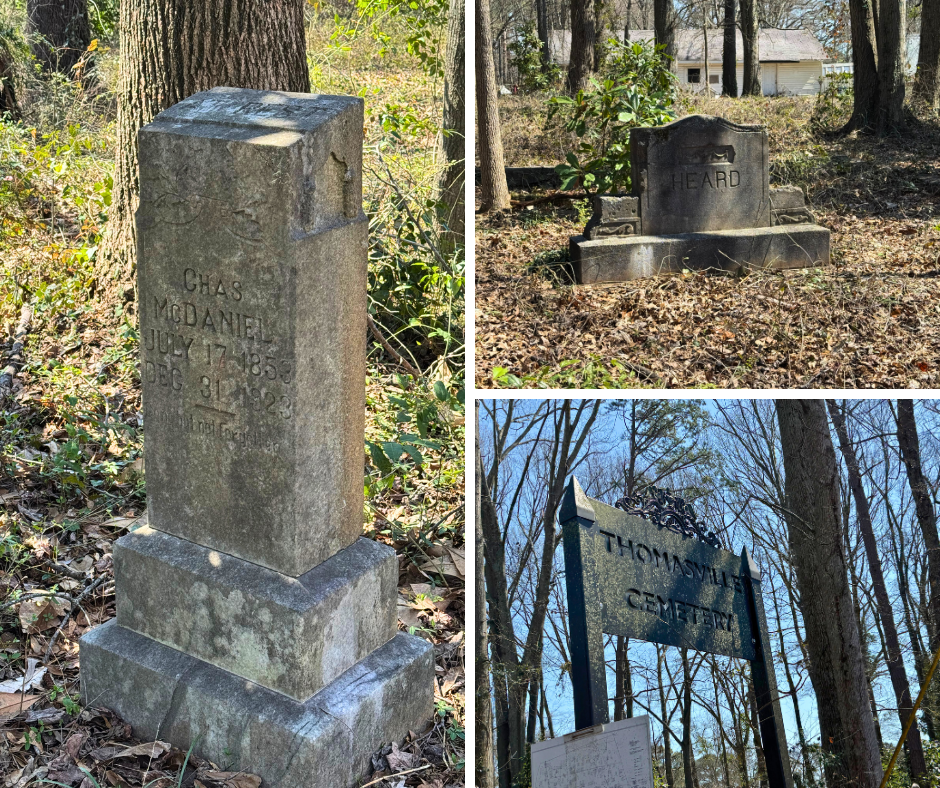
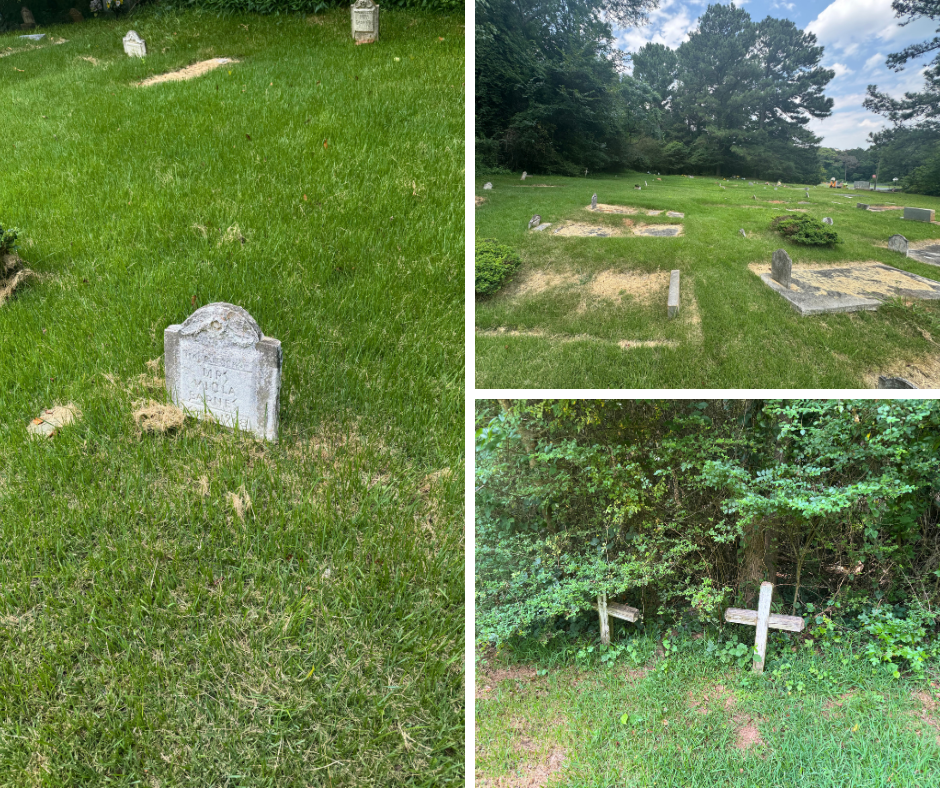
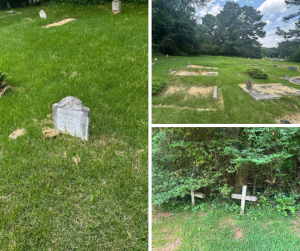
Thomasville Cemetery was established in the late 19th century in the Thomasville community, within the DeKalb County portion of Atlanta. The community was founded by Henry Thomas, a freedman from South Carolina, who established a rural neighborhood primarily composed of Black landowners. Over the years, the cemetery became a vital site of remembrance, though financial hardships meant that many families could not afford traditional headstones. Instead, the graves were marked with yucca plants and everyday items. As the years passed, nature slowly overtook the cemetery, with thick vegetation obscuring the site and making various markers unreadable.
In March of 2025, volunteers from the Metro South Community Improvement District (CID) launched a cleanup initiative aimed at restoring the cemetery to its former dignity. The project is part of a greater effort to restore the Thomasville Cemetery as part of Atlanta and DeKalb County’s Black heritage. Longtime community advocacy has recognized Thomasville Cemetery as a resting place for over 400 individuals, and a landmark representing the legacy of Black communities in the area. Media coverage from 11 Alive News and Fox 5 Atlanta spotlighted the project, acknowledging support from residents, historians, and leaders dedicated to honoring the contributions of those buried there.
Despite the challenges posed by overgrowth and damaged gravestones, the commitment to restoration remains strong. The goals are to clear and maintain the cemetery, improve accessibility, and ensure that the stories of the interred are preserved. Restoration is vital to honor the past and secure the cemetery’s place in the future.
Lithonia One – Bruce Street Cemetery
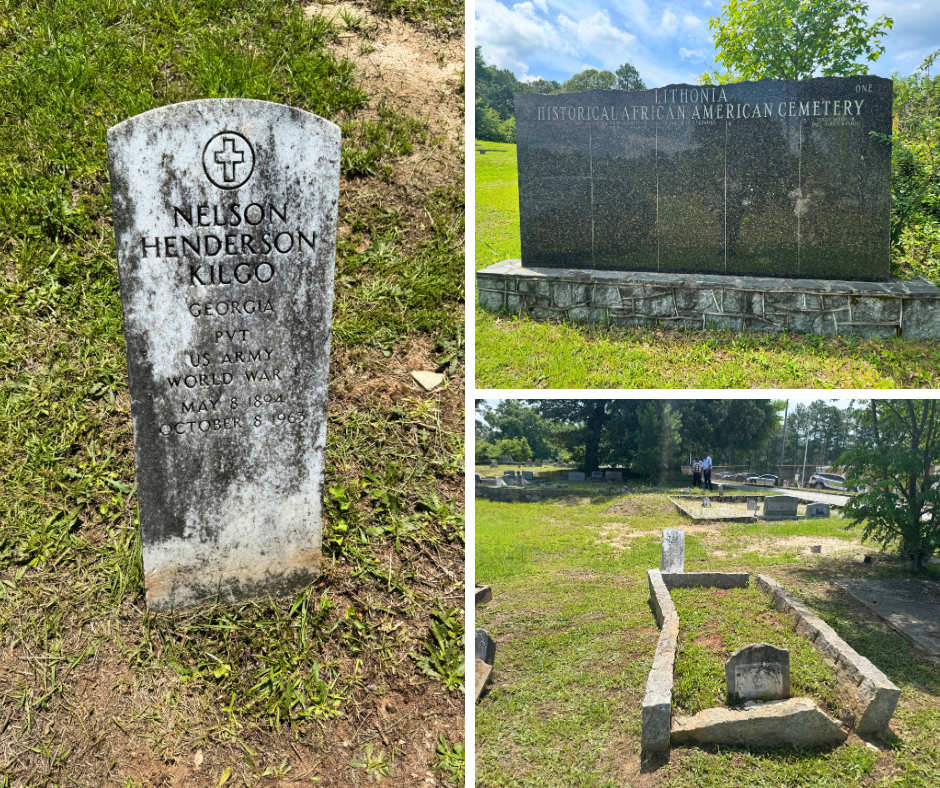
Lithonia One Cemetery, also known as Bruce Street Cemetery, became the resting place of many Black residents of Lithonia. The earliest known burial was in 1911. The 6.7-acre cemetery was originally part of the Jacob Chupp Farm. Some of the graves are simply marked by granite boulders and yucca plants. Local Black funeral homes such as Cox Brothers or Haugabrooks crafted the cemetery’s unique headstones, reflecting the community’s efforts to maintain dignity and respect for the deceased during a time when accessibility to quality funeral services was limited for Black Americans.
Over time, the cemetery became neglected, with weathered headstones and overgrown vegetation obscuring its historical significance. In 2017, concerns about the cemetery’s poor condition were expressed in news reports from local outlets like WSB-TV and the Atlanta Journal-Constitution. Frustrated families felt that the site was not properly maintained. Around 2004, the Friends of Lithonia African American Cemetery was founded to restore and preserve the graveyard. During Ms. Barbara Lester’s tenure as FLAAC president, the organization led cleanup efforts, raised funds, and collaborated with local historians to develop a maintenance system for continued care. The restoration project was supported by community leaders and organizations who acknowledged the importance of preserving Black history. FLAAC is no longer active, but the community’s commitment to preserving the cemetery’s legacy remains evident with ongoing efforts to honor those interred there and continued advocacy for its restoration.
Shermantown Cemetery
Shermantown is a historic Black community located near Stone Mountain. Its establishment began in the post-Civil War era when newly freed enslaved people settled in the area. The name honors Union General William T. Sherman, whose “March to the Sea” destroyed Atlanta as he moved southeast towards Savannah. Shermantown grew into a self-sufficient community where Black residents could start businesses, establish churches and schools, and own homes. It became a vital space for the growth of Black life and culture.
The development of Shermantown is closely linked to the quarrying industry in Stone Mountain. Many residents worked in the quarries that supplied granite for cities across the nation. The community fostered a strong sense of unity, organizing churches like Bethsaida Baptist Church (1868) and establishing a Rosenwald School for Black children, which was burned by the Ku Klux Klan in the 1940s. Despite being near the Stone Mountain Confederate memorial and Klan activity, some residents remember the complexities of coexistence fondly. The community’s history is mainly preserved through oral traditions.
While Shermantown’s history begins in the post-Civil War era, the formal history of its cemetery is more recent. The earliest documented burial is recorded as 1960. Due to this limited historical record, the cemetery’s story feels incomplete. Recognizing the information gap, historians in the Stone Mountain area are working to gather more information. Their efforts aim to connect these individual grave sites to the broader history of the Shermantown community.
Decatur Cemetery’s African American Section
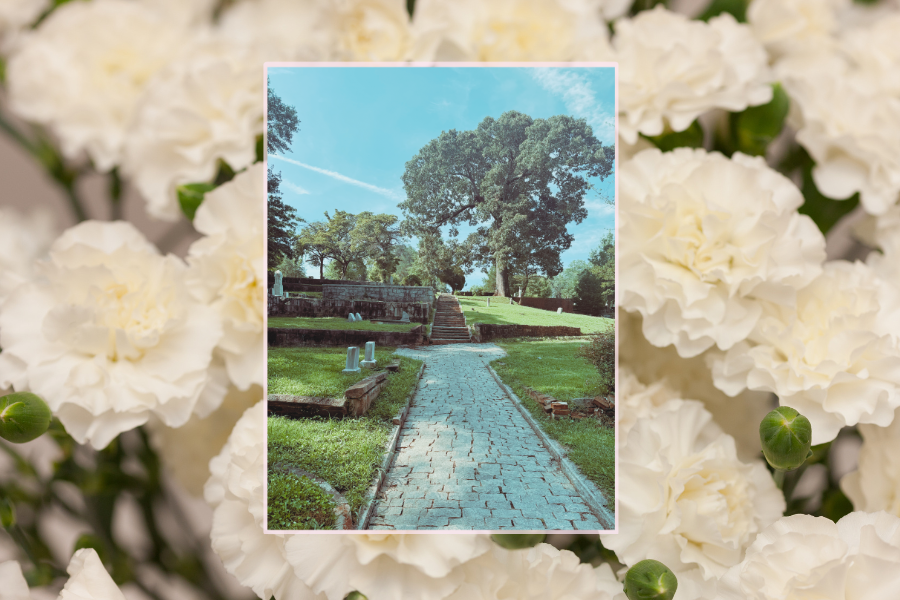
The Decatur Cemetery is the largest green space in downtown Decatur, covering 58 acres. Politicians, authors, educators, business people, and artists are among the notable individuals interred at the cemetery. The earliest gravestones are dated to 1827 and 1828, predating the railroad and the establishment of Atlanta. Over time, the cemetery has expanded to more than 20,000 gravesites, reflecting the growth and evolution of Decatur. In 1997, the cemetery was added to the National Register of Historic Places.
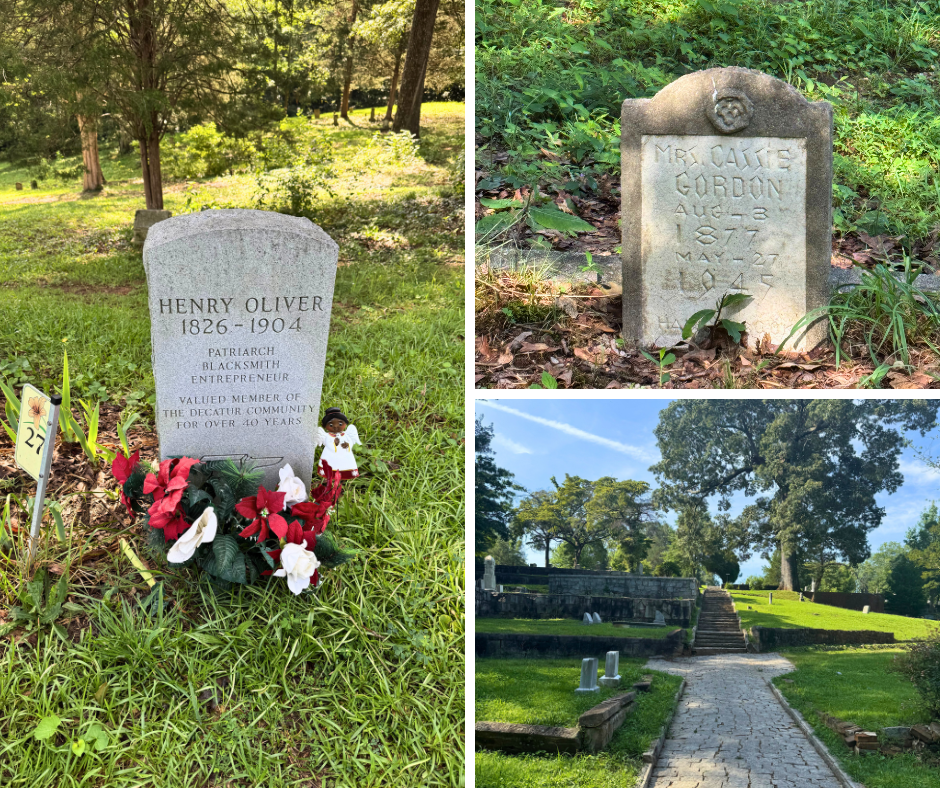
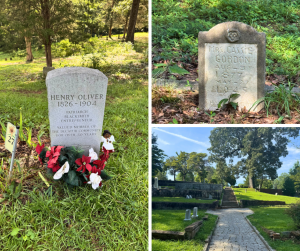
The African American section of Decatur Cemetery is located within the 7.5-acre area known as the Old Cemetery. This section, also referred to as Section 6, is not a continuous expanse of land; instead, it comprises three separate areas. While 21st-century sections of the cemetery are integrated, the older parts still retain their racial designations. The Friends of Decatur Cemetery, along with community volunteers and Ms. Laurel Wilson, are actively researching and recognizing the lives of early Black residents who are buried there. Many of the deceased played a crucial role in establishing the Beacon Hill Community in Decatur.
The African American section of Decatur Cemetery tells an important story of a community that endured segregation while contributing to Decatur’s development. The earliest documented Black burials started in 1886, and included Dorcas Henderson, Israel Sandford, and Simon Read. This section is home to prominent people such as Henry Oliver, a respected blacksmith and businessman who had a road named after him (this is now part of Commerce Drive), and Oscar White, who was born into slavery. After emancipation White became a chauffeur and servant to the Bucher Scott Family for over 30 years. This section is a testament to the complex landscape of the past, where racial divisions remained even in death.
Black cemeteries in the United States have served as more than a final resting place for the dead. They stand as symbols of resilience and cultural preservation. The unique burial practices developed as a reaction to segregation reflect the resourcefulness of Black communities. Preservation of these cemeteries honors the individuals laid to rest and safeguards the untold history of Black Americans in DeKalb County for generations to come.
Bibliography
Cemetery One (Lithonia)
“Families Upset by Condition of Cemetery.” WSB-TV Channel 2, April 23, 2017. https://www.wsbtv.com/news/local/dekalb-county/families-upset-by-condition-of-cemetery/515233797/.
“Lithonia Cemetery #1.” Find A Grave. Accessed May 23, 2025. https://www.findagrave.com/cemetery/2336986/lithonia-cemetery-%231.
“Lithonia Residents Upset with Level of Care at Local Cemetery.” The Atlanta Journal-Constitution, April 23, 2017. https://www.ajc.com/news/local/lithonia-residents-upset-with-level-care-local-cemetery/fSIgonYgby9jkLTJXmfRJL/.
“DeKalb County Officials Apologizing After Bodies Found Buried Under Road.” WSB-TV Channel 2, April 23, 2017. https://www.wsbtv.com/news/local/dekalb-county/dekalb-county-officials-apologizing-after-bodies-found-buried-under-road/SNWBFEJYDJAGZBOYU2R34G72OY/.
Decatur Cemetery’s African American Section
City of Decatur, GA. “Cemetery.” Accessed July 3, 2025. https://www.decaturga.com/publicworks/page/cemetery.
City of Decatur, GA. “Preservation.” Accessed July 2, 2025. https://www.decaturga.com/community/page/preservation.
Decatur History. “Decatur Cemetery.” Accessed July 2, 2025. https://decaturhistory.com/cemeteries/decatur-cemetery/.
Digital Library of Georgia. “Decatur Cemetery.” Accessed July 2, 2025. http://dlg.usg.edu/record/nge_ngen_m-3136.
Friends of Decatur Cemetery. “Friends of Decatur Cemetery.” Accessed July 2, 2025. https://legacydecatur.org/friends-of-decatur-cemetery/.
The Historical Marker Database. “Historic Decatur Cemetery.” Accessed July 24, 2025. https://www.hmdb.org/m.asp?m=9685.
Wilson, Mary Ann. “History Remains in Decatur Cemetery.” Decaturish.com, October 26, 2017. https://www.decaturish.com/news/decatur/history-remains-in-decatur-cemetery/article_30a76348-e369-51bf-a1e0-dc06fbcde712.html.
Shermantown Cemetery
DeKalb History Center. “Shermantown, Resilience in Coexistence.” February 7, 2024. https://dekalbhistory.org/blog-posts/shermantown-resilience-in-coexistence/.
DeKalb History Center. “National Register of Historic Places form and photos, 2000.” Accessed July 28, 2025. https://dekalbhistory.org/wp-content/uploads/2022/06/dekalb-history-center-city-of-stone-mountain-historical-register-form-and-photos-2000.pdf.
Find a Grave. “Shermantown Cemetery.” Accessed July 28, 2025. https://www.findagrave.com/cemetery/2624608/shermantown-cemetery.
Stone Mountain Historical Society. “About Our Village.” Accessed July 28, 2025. https://stonemountainhistoricsociety.org/about-our-village/.
Thomasville Cemetery
“Volunteers Clean Up Historic Thomasville Cemetery in South DeKalb County.” FOX 5 Atlanta, February 2025. https://www.fox5atlanta.com/news/volunteers-clean-up-historic-thomasville-cemetery-south-dekalb-county.
“Thomasville Cemetery Restoration Honors Forgotten History.” 11Alive, March 2025. https://www.11alive.com/article/news/local/community-restore-historic-thomasville-cemetery/85-b6020023-e94e-4739-8e3d-4fd94b746bdc.
DeKalb History Center. “The Forgotten Town of Constitution, Georgia.” Last modified 2025. https://dekalbhistory.org/blog-posts/the-forgotten-town-of-constitution-georgia.