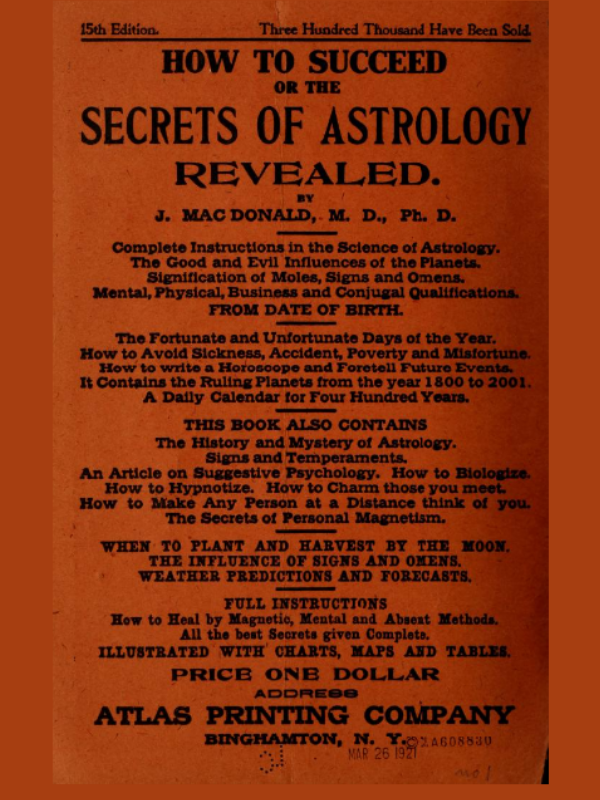
Stargazing: The Rise of Modern Astrology

Read on to learn about the popularization of Astrology and how it became solidified into the bedrock of American society.
By Rebecca Selem, Exhibits & Communications Coordinator
Sifting through newspapers.com I came across an article titled, “Your Horoscope May Solve Vexing Personal Problems,” which was surprising to me given this was printed in Georgia in 1934. Horoscopes, astrology, and the like are more common to read about and discuss in today’s society but when did it become commonplace among the masses, especially in the deep south? And how did it rise to the prominence it has today?
Humans have been looking to the skies for a deeper understanding of the world since the beginning of time. They sought knowledge to help them survive and later to attempt to predict natural events based on the precise locations of the stars and planets in the night sky.
Many believe astrology and astronomy emerged out of Mesopotamia and spread to regions in what are now modern Egypt, India, and Greece. However, numerous early civilizations developed their own astrology independently, including China and Mesoamerica. Astronomy and astrology were used to guide varying aspects of early societies, including building structures – like the pyramids or stone circles – to show the patterns of the cosmos.
“The practice probably began as soon as humans first started to observe astronomical cycles, with some of the earliest evidence dating from the 3rd millennium BCE. Throughout much of history, and up until the 17th century, astrology was considered an academic discipline across much of Eurasia. In fact, astrology was commonly accepted in political and cultural circles with astrological concepts applied in other fields including alchemy, meteorology, and traditional medicine.” – UNESCO
The practice of modern astrology is most similar to the Hellenistic version from ancient Greece. Astrology was popular in the Roman empire but was suppressed after the rise in Christianity, and later returned during the Enlightenment period in Europe. It was taught in the universities until the early 1600s but waned after losing support within the academic sphere. The practice made its way to the United States of America via the colonists and the books they brought with them. Astrology survived through the centuries by remaining in the background of the public consciousness via dream manuals, sheet music, etc.
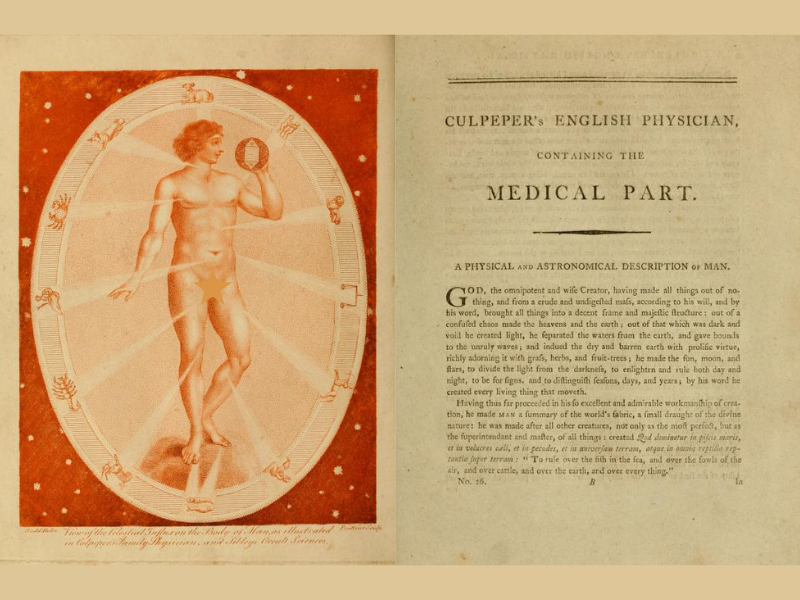
Culpeper’s English Physician, published in 1789.
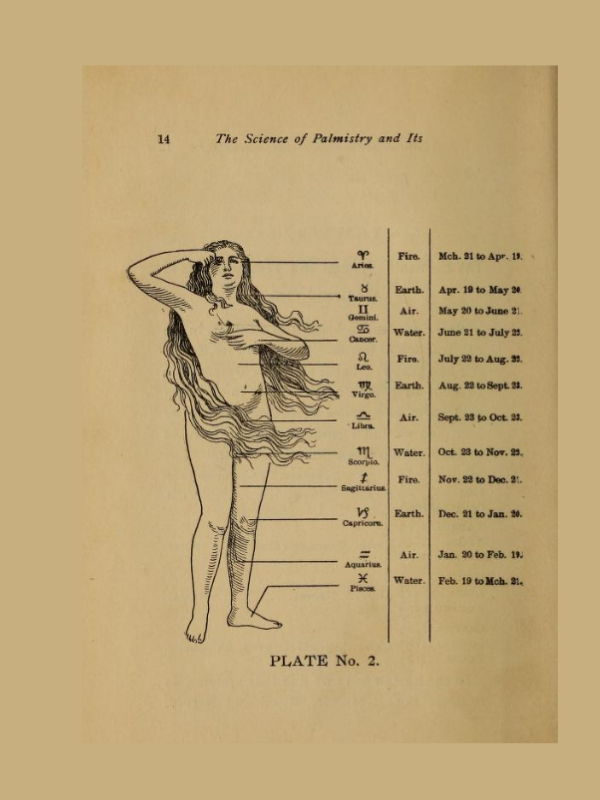
In 1840s America, the Spiritualism movement began, right on the heels of the discovery of Neptune (1846). Similar to the abolitionist movement, the spiritualist movement gave women a voice and helped to further sow the seeds of feminism in America. All manner of divination practices were embraced as people became more curious about the unseen and unknown areas of their reality – palmistry, reading tea leaves, and astrology, along with contacting the dead by way of a medium.

Astrology hit the mainstream largely due to American astrologer Evangeline Adams. Gaining momentum towards the end of the 19th century, Adams not only built an incredibly successful astrological consulting business but also helped to solidify astrology as a legitimate practice in the eyes of the law – forging the way for future astrologers.
In 1899, Evangeline Adams predicted the catastrophic Windsor Hotel fire in New York City, catapulting her into the limelight. During her long career, she made it a point to use the media to boost her business. She offered customized, mail order horoscopes in the newspaper, hosted radio shows, was featured in magazine interviews, and published books. Her thrice-weekly WABC radio show amassed more than 1.3 million listeners. She set up shop in Carnegie Hall in New York City, seeing elite clientele like J. P. Morgan, Charles Schwab, and Tallulah Bankhead, among others. The practice of economic forecasting (the process of attempting to predict future conditions of the economy using a combination of indicators) became a profession right around the same time as astrology – within the first three decades of the 20th century.
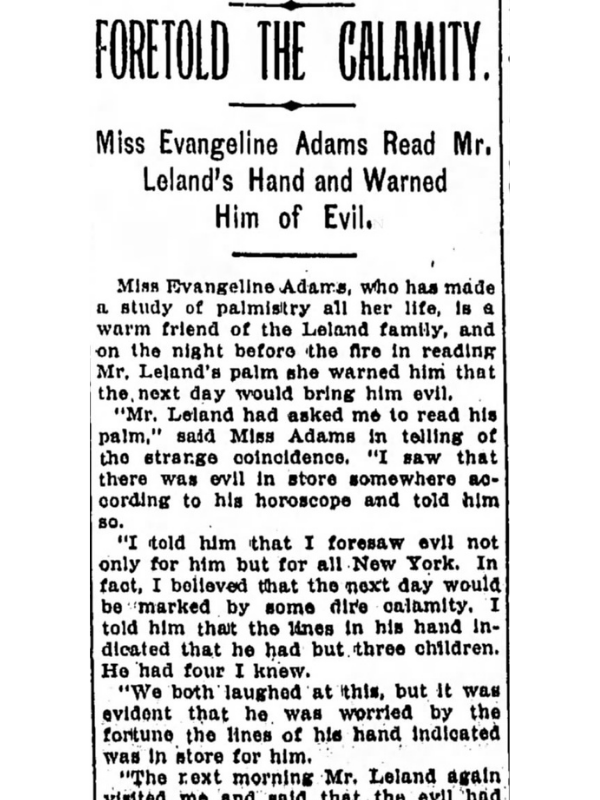
From The World, March 20, 1899.
Adams had a few run-ins with the law during her career as an astrological consultant. Most notably in 1914 when she was arrested and charged with “fortune-telling,” which was an illegal practice in New York at the time. Fed up with the repeated accusations she hired a fancy lawyer and told him not to let the case get thrown out. Adams wanted it tried thoroughly so it would set a precedent for astrology and get it out from under the guise of “fortune-telling.” She won the case, meaningfully opening up the space between science and non-science. Adams practiced astrology until her death in 1932.
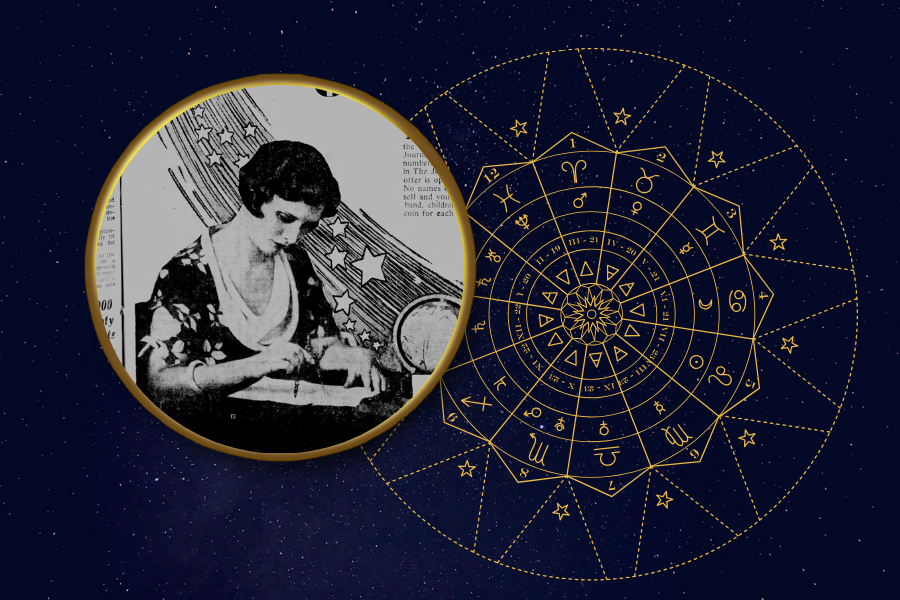
In 1931, The Atlanta Journal began a horoscope column featuring Miss Marguerite Carter, expert astrologer. Similar to Evangeline Adams, she provided daily horoscopes to readers and offered more personal readings for 10 cents, which required the client’s name, plus the place and time of birth. She hosted a daily radio show on WSB and offered lectures on astrology at the Davison’s tea room in Atlanta. Carter also wrote columns for newspapers in the Indianapolis and Minneapolis areas.
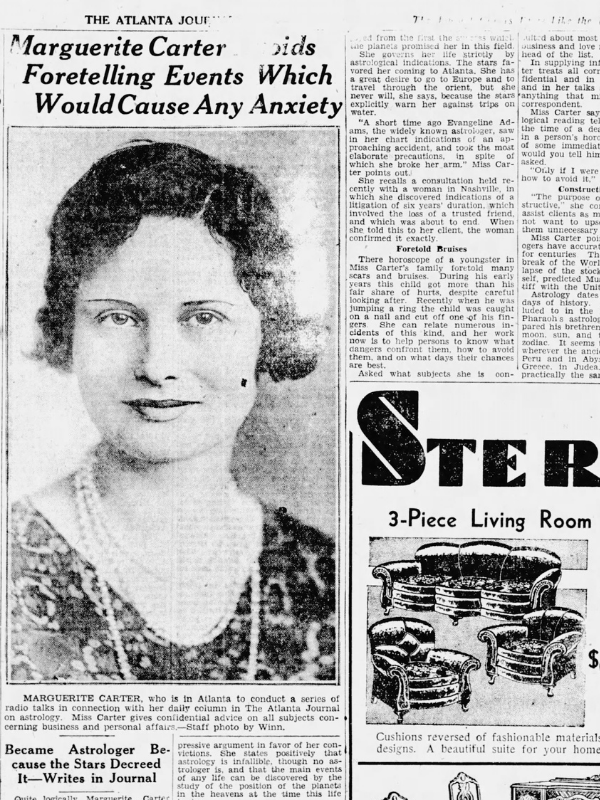
From The Atlanta Journal, February 18, 1931.
By the late 1930s, astrology became a common topic to converse and read about. Newspaper articles from the time argue the validity of astrology as “the oldest of sciences” while others call it a “gigantic fraud.” Either way, astrology takes center stage during this time and stays at the forefront of society’s consciousness through the decades and into the present. As it turns out, we’re just as obsessed with the stars as our ancestors were.
When thinking about the legal battles Evangeline Adams had to go through in order to legitimize astrology in the eyes of the law, I perused the laws within our own county to see if there was any mention of astrology. There is.
In the DeKalb County Code of Ordinances, astrology is listed in chapter 15, article III, stating:
“It shall be unlawful for any person to practice astrology in the unincorporated area of the county unless such person holds a valid, unexpired and unrevoked license to engage in such practice in astrology issued by the county.”
There is also mention of fortune-telling in section 16-2:
“It shall be unlawful for any person to engage in or participate in the practice of fortunetelling, phrenology, clairvoyance, palmistry or other kindred practices, businesses or professions where a charge is made or a donation accepted for such services. This section does not apply to astrology.”
Notice the exclusion of the practice of astrology. So even today, there are remnants of Evangeline Adams’ efforts to raise astrology to a prominent place within our society.
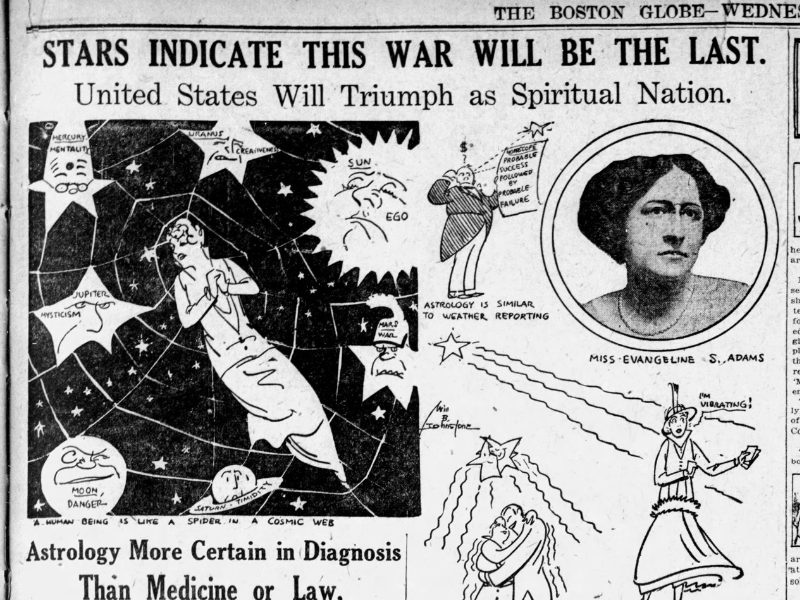
From The Boston Globe, December 30, 1914.
Astrology is very much a part of our society today. Remnants of it live in every corner of mass media – television, film, literature, and music. If you were to ask someone on the street about their knowledge of astrology, they would most likely be able to at least tell you their zodiac sign or that their Mars is in Capricorn (meaning they assert themselves rationally and intentionally), among other details.
So the next time you come across a necklace with “Aquarius” stamped on it, listen to a song featuring a Pisces or overhear a conversation about Mercury retrograde, perhaps you’ll find the stars aren’t as far away as they seem.
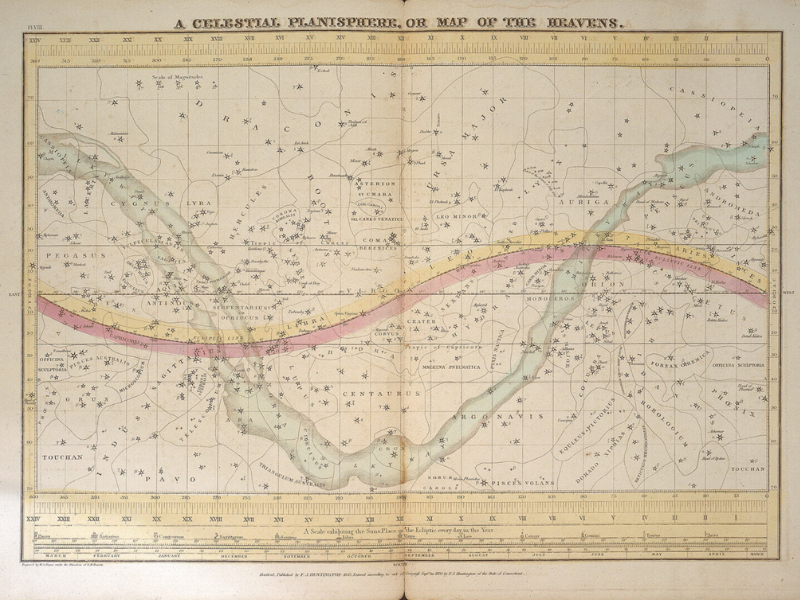
Atlas of the Celestial Heavens, 19th century. From the Smithsonian Design Museum.