Twelve Ladies Sewing Club, Lynwood Park.

By Monica El-Amin, African American History Coordinator
History of the Twelve Ladies Sewing Club, Lynwood Park.
I attended the Twelve Ladies Sewing Club dedication ceremony in Brookhaven in February of 2026 with great enthusiasm. I was not aware of the Twelve Ladies Sewing Club, nor the community of Lynwood Park. This event sparked my curiosity to learn more about the community and the women who fostered educational opportunities for Black children by building the Lynwood Park School. Currently, I am conducting interviews with former and current residents of Lynwood Park. In my research, I ask the interviewees about their familiarity with the Twelve Ladies Sewing Club. The club was a civic organization dedicated to the advancement of the Lynwood Park community. Though the club has been defunct for decades, the impact of their efforts still lives on in those who remember them.
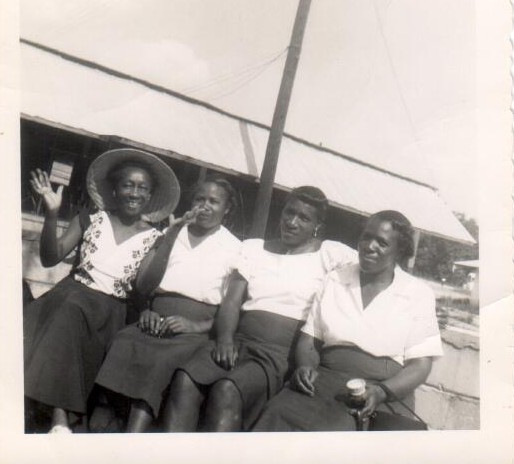
12 Ladies Sewing Club on vacation. Photo from Edgar “Chip” Jones.
History of Lynwood Park
The establishment of the Lynwood Park community goes back to 1933. African American families moved into the area, then called Cates Estate and later renamed Lynwood Park after realtor Mel Lynn. Over the years, Lynwood Park continued to grow as families came from other parts of Georgia, like Dalton, Monroe, and Athens as well as the metro Atlanta area. According to the Lynwood Park Foundation (a private nonprofit established to preserve history and benefit the community), Lynwood Park was composed of smaller communities that no longer exist. These areas were adjacent to Buckhead, Chamblee, and Sandy Springs.
The first school in the Lynwood Park neighborhood was the Little Red School House on Mae Avenue. It was a one-room building with no running water (other sources describe it as having three rooms). Heat was provided through a wood-burning stove. The school was built by local families donating money, supplies, and time. The Little Red School House was in operation from 1942 to 1949. It was an elementary school (from 1st to 7th grade) with 125 students enrolled. When students graduated, they would attend high school in Chamblee near Zion Baptist Church.
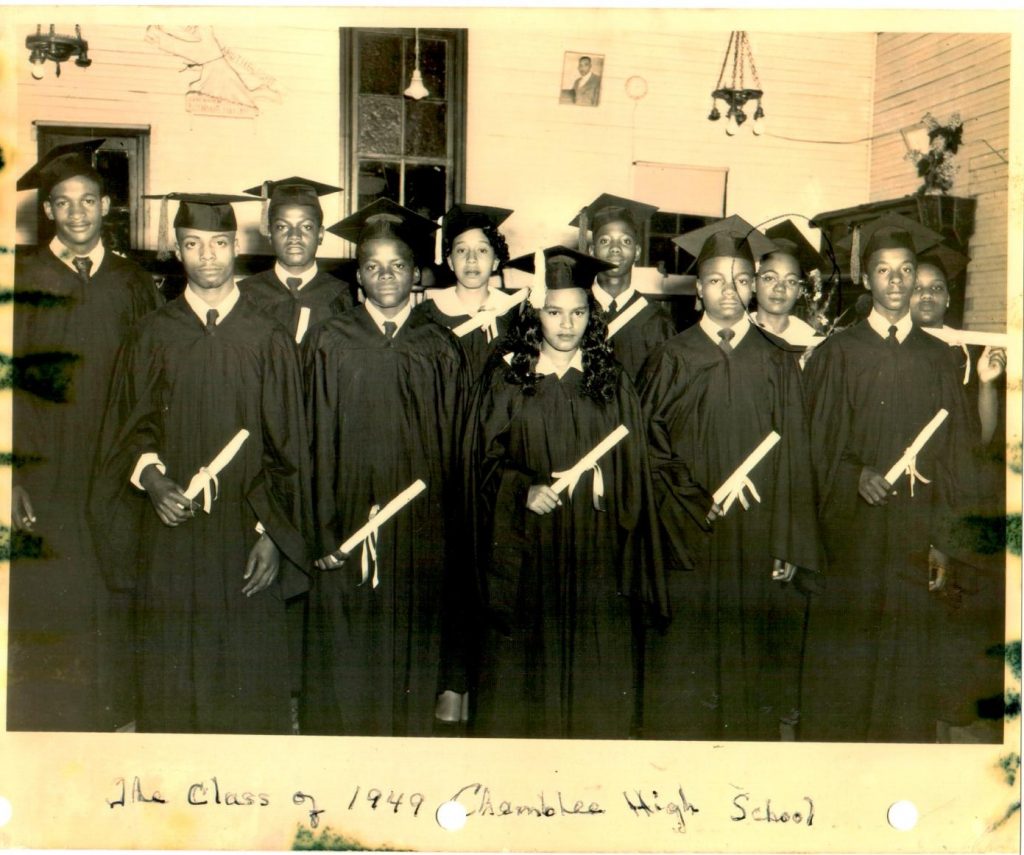
Class of 1949, Chamblee High School. Photo from Edgar “Chip” Jones.
Who or What was the Twelve Ladies Sewing Club?
The Twelve Ladies Sewing Club was formed in the early 1940s. The club was a neighborhood civic organization created to support the community. Ms. Minerva Bennett was the club’s first president. As the club grew, it was known as the “Thirty-Six Ladies Sewing Club,” which later divided into three Twelve Ladies Sewing Clubs. Each club had its own leadership, and Ms. Bennett served as the chairperson over them. The members of the Sewing Clubs met at one member’s house on a rotating basis. The ladies discussed fundraising projects at meetings, and every quarter they would meet at China Grove Baptist Church to review their goals, missions, and fundraising achievements. Typically, when fundraising, the ladies would host fish fries and barbecues, selling plates to raise money.
The primary goal for the club was to raise funds for the betterment of the Lynwood Park community. Funds were raised for projects such as financing street lights, establishing a telephone service, and purchasing land to construct the Lynwood Park School. The ladies worked tirelessly for years to meet their goals. In 1948, the Twelve Ladies Sewing Club raised money to purchase four acres of land on Osborne Road for $1,500. The land would be used for the DeKalb County Board of Education to build the nine-room Lynwood Park Elementary and High School. The school served students from Chamblee and Doraville, and its enrollment ranged from 247 students in 1949 to 747 students in 1964. The school closed in 1968 as part of the DeKalb County School System’s implementation of integration.
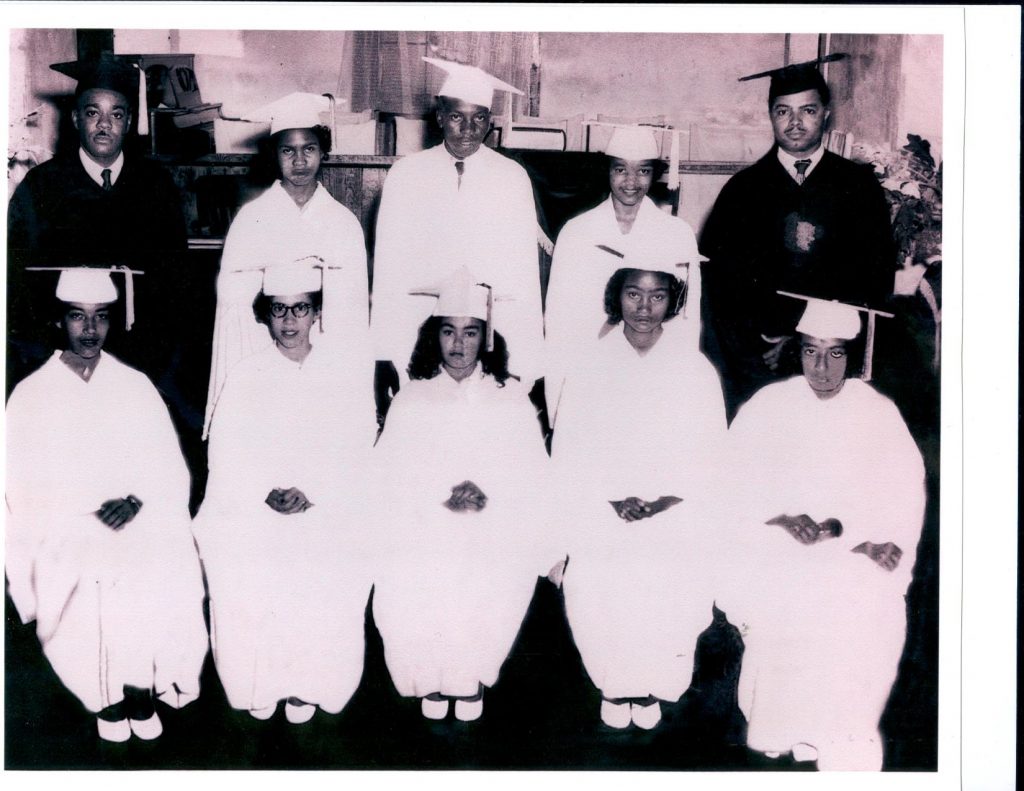
Class of 1953. Photo from Edgar “Chip” Jones.
Remembering the Twelve Ladies Sewing Club
During the course of my research, I have interviewed numerous alumni of the Lynwood Park School. I learned about their proximity to the Lynwood Park Community, and their knowledge of the Twelve Ladies Sewing Club. When I asked the interviewees about the community club, there were varied responses. Some of them heard of the Twelve Ladies Sewing Club through neighbors, while others had family members who were directly involved with the organization.
Edgar “Chip” Jones
Mr. Edgar “Chip” Jones is very familiar with the Twelve Ladies Sewing Club. His mother, Bertha Jones, was one of the members. He explained the inner workings of the club and recalled his mother hosting one of the meetings in their home and providing cake, cookies, and tea. He attended the Lynwood Park School in 1950, when the school opened. He said it was a nice building but lacked central heating and indoor toilets. “I think we did have running water, but I remember the school vividly when I was in first grade. And then after I finished the fourth grade, they actually closed the school down.” He said that the school closed in 1954, so that DeKalb County Schools could add a cafeteria, an auditorium, and additional classrooms. He has photographs of the Twelve Ladies Sewing Club and is actively working to preserve their legacy through the Lynwood Park Foundation.
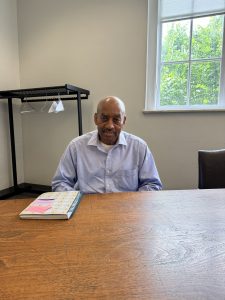
Edgar “Chip” Jones
Charlene S. (Scott) Bowden
The Twelve Ladies Sewing Club was formed before Charlene was born. Her grandmothers were part of the club. She recalled that these women worked to get the roads in Lynwood Park paved. Bowden said that the Twelve Ladies Sewing Club did not continue beyond the founding members. However, the ladies’ influence lived on in students in the 1970s who were forced to integrate Cross Keys High School. Those students adamantly requested that their diplomas have Lynwood Park High School printed on them instead of Cross Keys. While the physical sewing club dissolved, their efforts to support their community were passed on to the younger generations living in Lynwood Park.
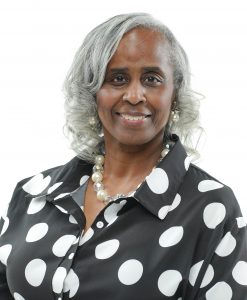
Charlene S. (Scott) Bowden.
Patricia Carter Jones
Patricia Carter Jones stressed the importance of the unification of the black communities in Lynwood Park, Doraville, and Chamblee to form the club. She expressed great excitement about these women successfully raising funds to buy the land Black students would have for their new school. She said that once the school was built, the club remained active for many years, filling a role similar to a PTA (Parent-Teacher Association). Members of the three Twelve Ladies Sewing Clubs consistently raised funds to ensure students had the resources they needed. Jones said the main club and its subcommittees coordinated efforts to better serve the community. Although Jones did not remember the names of other club members, she recalled that Ms. Catherine Jackson was the secretary.
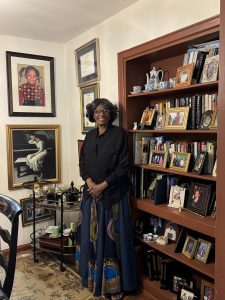
Patricia Carter Jones.
The history of the Twelve Ladies Sewing Club is one of many stories of the Black community in DeKalb County using self-reliance to address the needs of their community. During a time when equal funding to Black schools was denied by local school boards and governments, these women actively worked to provide more opportunities for Black students. White parents did not have to raise money to purchase school land for their children to attend public school; every citizen’s tax dollars provided those funds. Through organizing, fundraising, and building the foundation for educational progress in Lynwood Park, the “Ladies” worked to provide a service for Black students. The Lynwood Park School closed in 1968, and the remaining students integrated into Cross Keys High School and Chamblee High School. The interviewees were impacted by the Twelve Ladies Sewing Club, directly benefiting from their efforts. The legacy of the club speaks volumes about the impact everyday people can make on their community.
Sources
Secondary
Biggerstaff, Valerie. 2020. “History of Lynwood Park School in Brookhaven.” Past Tense GA, June 27. https://www.pasttensega.com/blog/lynwood-park-school.
BIGGERSTAFF, VALERIE. 2023. “Opinion: Brookhaven Honors Lynwood Park School With Historic Marker.” Appen Media, August 17. https://www.appenmedia.com/opinion/opinion-brookhaven-honors-lynwood-park-school-with-historic-marker/article_adf5f588-2bc2-11ee-b2c9-8793d321f3a4.html.
Baptiste, Brooks. 2023. “Comedian George Wallace Describes Growing up in Historic Lynwood Park.” Https://Www.Atlantanewsfirst.Com, Atlanta News First, February 6. https://www.atlantanewsfirst.com/2023/02/06/lynwood-park-dekalb-countys-oldest-black-neighborhood/.
Jones, Edgar. 2025. “Lynwood Park Historic Pillars | LPF.” LPF Lynwood Park Foundation. https://www.lynnwoodparkfoundation.org/news-and-updates/lynwood-park-historic-pillars.
Parker, Carla. 2016. “‘Lynwood Integrators’ Remembers First Day of School Integration.” The Champion Newspaper | 404-373-7779 | Georgia, January 26. https://thechampionnewspaper.com/lynwood-integrators-remembers-first-day-of-school-integration/.
Reporter Newspapers. 2018. “Memories of Brookhaven’s Historic Lynwood Park.” Rough Draft. April 29, 2018. https://roughdraftatlanta.com/2018/04/29/memories-of-brookhavens-historic-lynwood-park/.
Primary
“Patricia Carter Jones oral history interview conducted by Monica El-Amin in Decatur, Georgia, 2026-04-07.” From the DeKalb History Center, Lynwood Park Research Project. Audio
“Edgar Jones oral history interview conducted by Monica El-Amin in Decatur, Georgia, 2026-05-12.” From the DeKalb History Center, Lynwood Park Research Project. Audio
“Charlene S. Bowden oral history interview conducted by Monica El-Amin in Decatur, Georgia, 2026-03-25.” From the DeKalb History Center, Lynwood Park Research Project. Audio