
EXHIBITS & HISTORY
Avondale Estates: The Haven of Health and Happiness
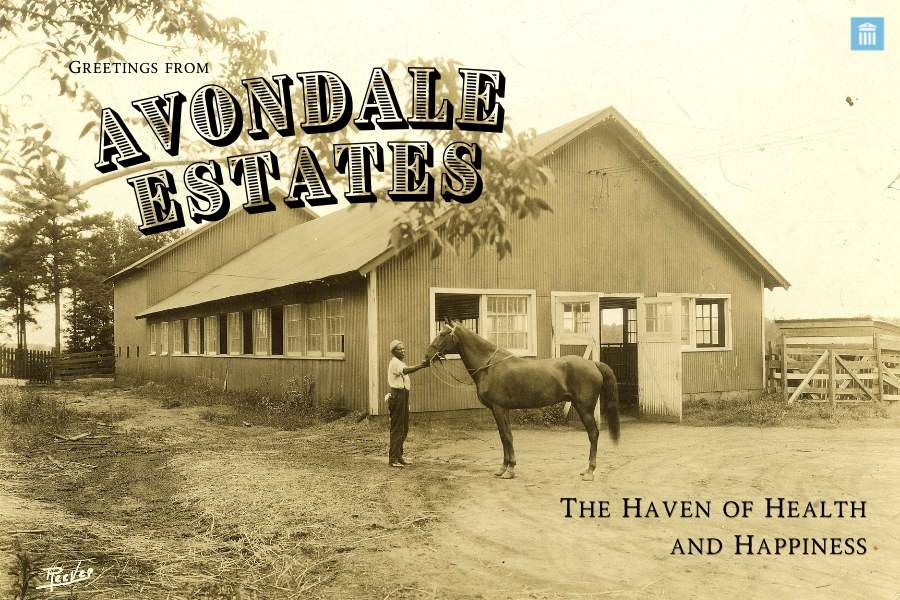
This exhibit was created by the DeKalb History Center and was on display from August 2021 – June 2025.
The ‘Before’ Picture – In the United States
It was the mid-1920s. A time of prosperity and celebration. World War I had ended and the country breathed a sigh of relief that wartime was over. From 1920 to 1929, the nation’s total wealth more than doubled. Many Americans developed a more carefree attitude and wanted to be entertained by going to the motion pictures or dancing. They purchased modern products like vacuums, radios, and refrigerators on newly invented consumer credit plans.
However, not everyone was celebrating. The 1920s brought on just as much conflict as they did celebration. There were massive changes in society that stirred up resentment and fear in many. Transitions varied from the end of World War I to the Great Migration, new-found freedoms for women to an increase in immigration, and out of control inflation to the mainstreaming of Jazz. Much of this change triggered an unease in people who longed for the “good old days” and groups like the Daughters of the Confederacy (UDC) and the Klu Klux Klan (KKK) used that discomfort to their advantage and gained national influence. The Red Scare and the Red Summer in 1919 led to nativist and anti-immigration hysteria and anti-Black violence across the country. The National Origins Act passed in 1924 to severely limit immigration from southern and eastern Europe. Combined with other federal acts, our government sought “to preserve the ideal of U. S. homogeneity” by excluding most people who were not white Protestants.
The Red Summer of 1919
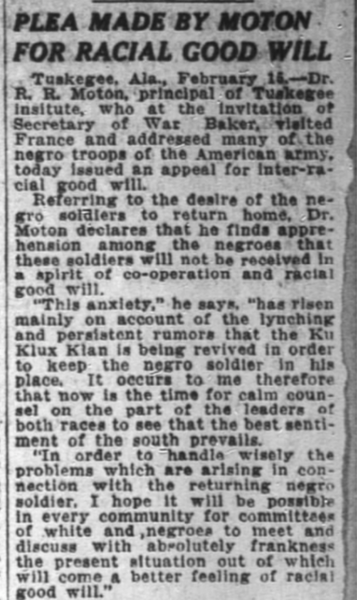
Many white soldiers returning from war caused a wave of violent and racist attacks against fellow Black servicemen that spread across the country. White men feared that Black veterans would gain respect for their service and become more confident in their fight against racial injustice. The violence was an effort to force Black soldiers back into a subordinate status despite their bravery fighting for our country.
The ‘Before’ Picture – In Georgia
For the first time in history, more people were living in cities than on farms. Farming proved to be difficult during this time due to several factors. The invention of rayon caused cotton prices to fall drastically while the return of the boll weevil ravaged cotton farms. There was a severe drought in 1925 that strained farmers ever further and depressed the economy in Georgia. Some farmers were forced to sell their farms and look for jobs in cities. This was especially devastating to Black populations in Georgia because many relied on farming to make a living and were unable to find suitable jobs in the cities. Many had to resort to whatever they could find to feed their families.
Due to the disruptions in the farming world, Black Georgians migrated to Atlanta in search of better ways to make a living. During the early 1900s, the population of African Americans in the Atlanta area rose exponentially. This led to job competition and discomfort among whites, and caused tension between the races. During the 1920s, white suburban neighborhoods rose in popularity. Access to automobiles became affordable and people could choose to leave the city.
Many left urban environments to escape what they saw as unfavorable conditions and found cleaner, safer surroundings in new suburbs where they would raise their families. Real estate development was at a peak and the middle class sought an escape from the busy streets of the dirty city and a way to show the world they had achieved success. Avondale Estates was planned as a solution – the perfect escape.
Ingleside to Avondale Estates
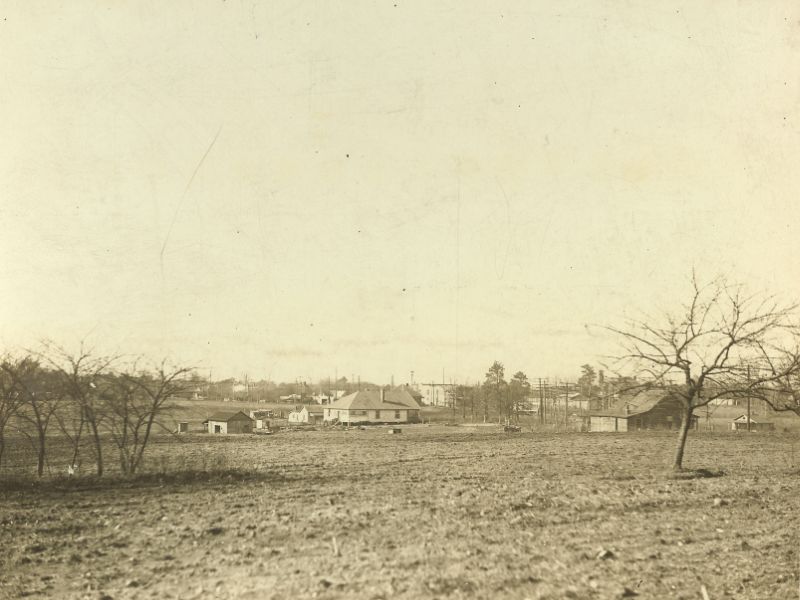
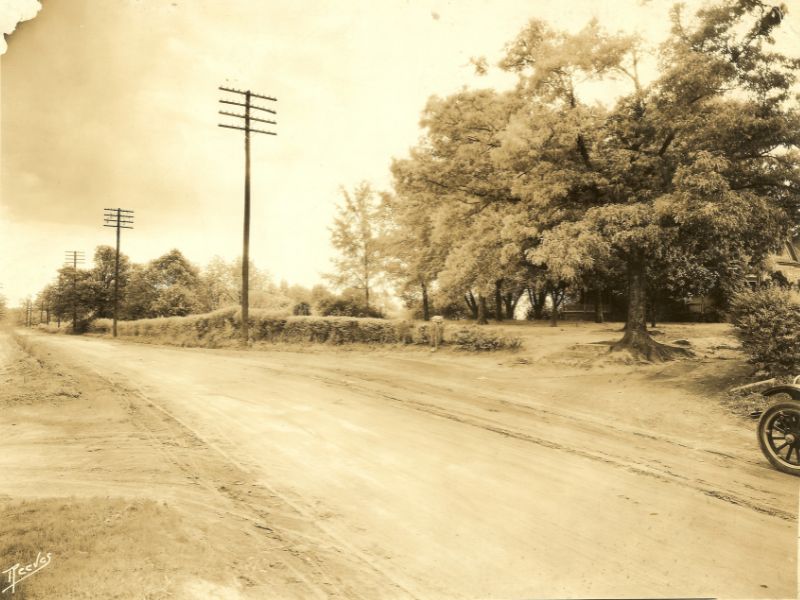
It is not clear when the idea first struck George Francis Willis to build his own “home lovers paradise,” but on January 19, 1924, he purchased the small town of Ingleside plus 950 adjoining acres for about $519,000. The additional land was the old Candler Farm. In 1925, the name of the town was officially changed to Avondale Estates.
He set his eye on the quaint, rural community during his many trips from Druid Hills to Stone Mountain, where he attended meetings for the Stone Mountain Confederate Memorial Association (SMCMA). This group led the efforts to make the Confederate Memorial carving at Stone Mountain a reality. Willis, along with other prominent members, worked alongside the UDC and Samuel Venable to organize the construction of “one of the wonders of the world.”
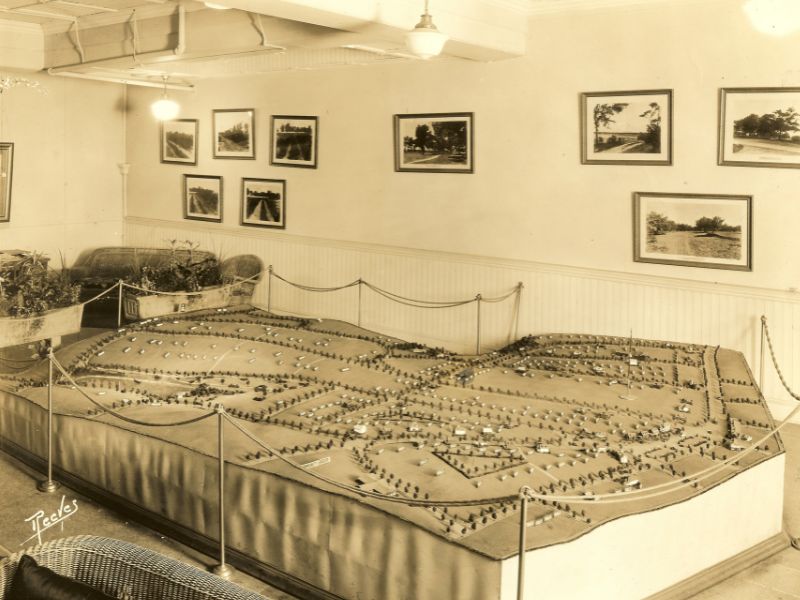
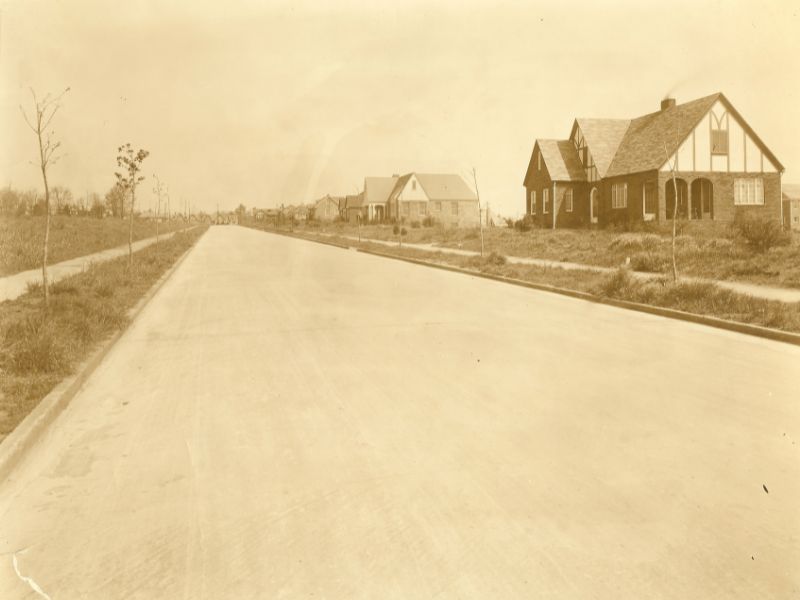
Avondale Estates was incorporated in 1926 and was reported as the smallest incorporated city in the United States. Before the transition, Ingleside was a rural town consisting of rolling hills, farms, and woodlands with no paved roads, and few automobiles. As soon as the purchase was finalized, Willis hit the ground running and began hiring contractors to begin work. The land was soon developed into 35 miles of graded and paved streets, along with sewers and water mains.
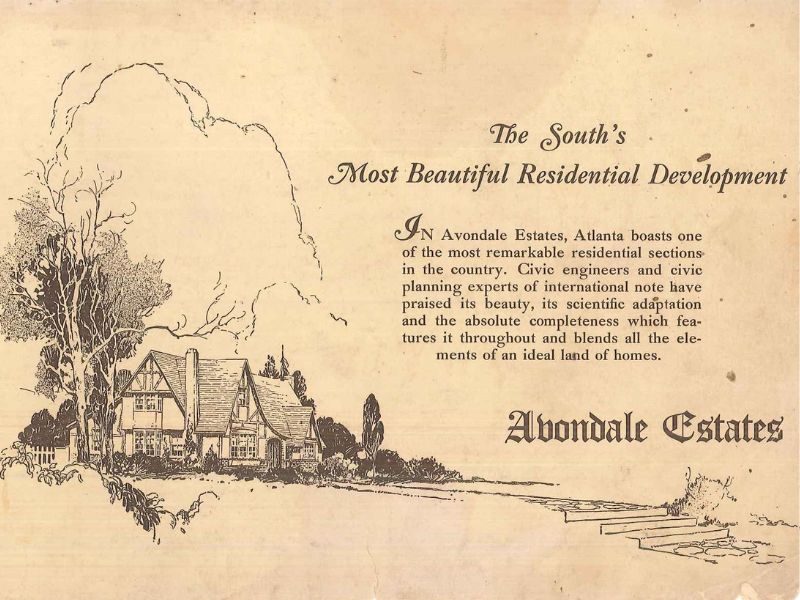
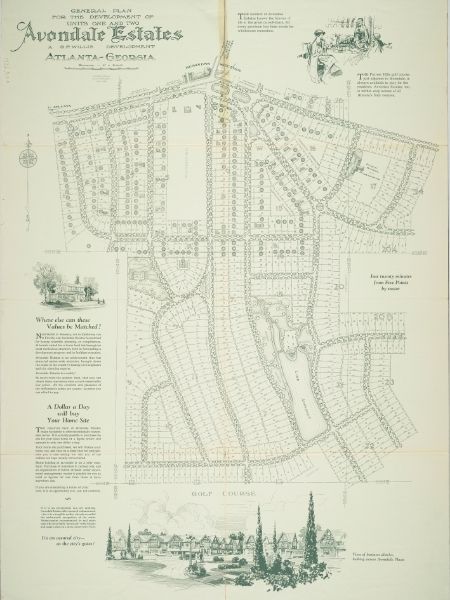
Willis wanted the property to be developed into a “model residential suburb, using international experts in civil engineering to make it the most remarkable in the country.” Unlike most communities in Georgia, Avondale Estates did not grow organically. It was planned from the beginning and developed all at once.
George Willis hired the best professionals he could find to complete his vision: Robert Cridland (landscape architect), O.F. Kaufmann (chief engineer), Arthur Neil Robinson (architect), and J.G. Hardeman (landscape gardener).
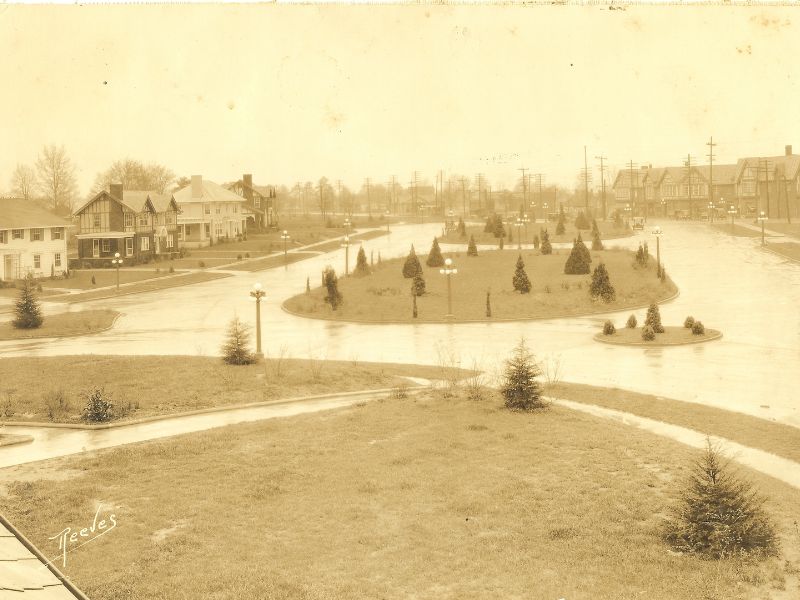
New technology, such as the Ford tractor and the steam shovel, was used in the building of Avondale Estates. Today, you can still find Robert Cridland’s handiwork within the city including landscaped medians and traffic islands. His plan created various parks and bridle paths within the neighborhood to provide easy access to Avondale Lake while avoiding the more heavily trafficked roads.
The land that was to become the “seat of an ideally perfect social and political life” was segregated with racially restrictive covenants which prohibited the sale or lease the property “to any person or persons of color, or to any corporation which has as any of its officers any persons of color.” The new city limits and covenants forced the Black citizens, who were about 2% of Ingleside’s population, out of Avondale Estates; and into unincorporated DeKalb County. Racially restrictive covenants were not used just in the South, but were embedded in property deeds all across this nation. They were officially banned in 1948 by the U.S. Supreme Court; this single act did not end segregation practices in this country.
Prejudiced zoning ordinances were being passed in Atlanta during this time as well. Many real estate developers employed deed restrictions preventing ownership to anyone of African descent. In June of 1913, Atlanta Mayor James G. Woodward signed a statute into law that designated “Colored” and “white” blocks of the city and prohibited the movement of Blacks and whites into each other’s areas, to enforce strict racial segregation. Similarly, in 1922, the aldermanic board passed an ordinance that defined north Atlanta “for whites only”
A Home Lovers Paradise: the Amenities
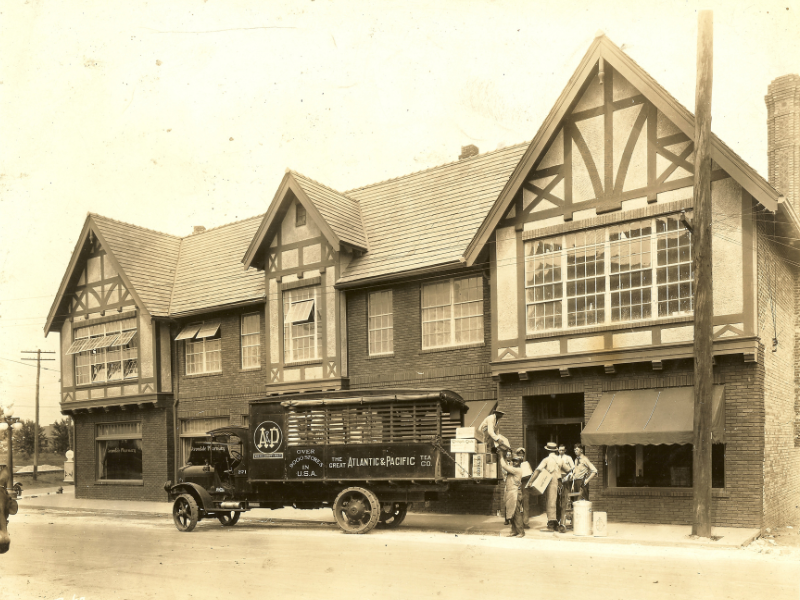
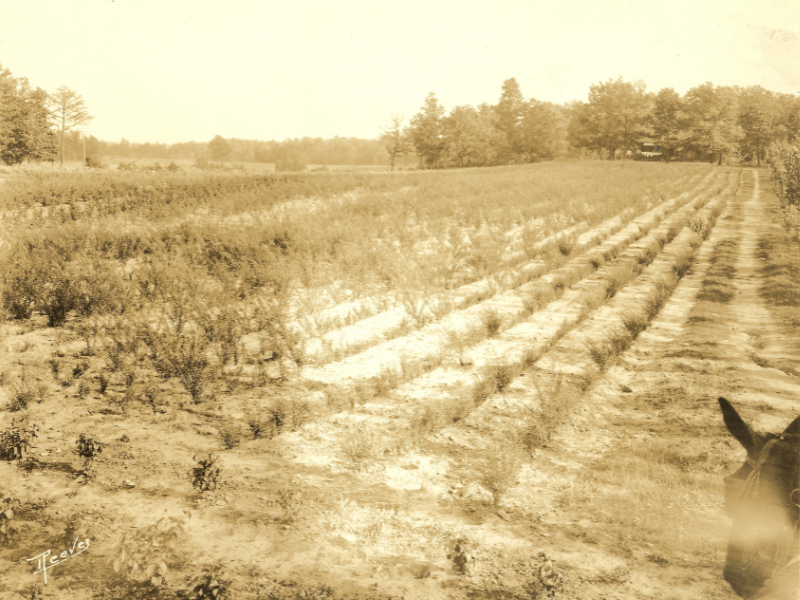
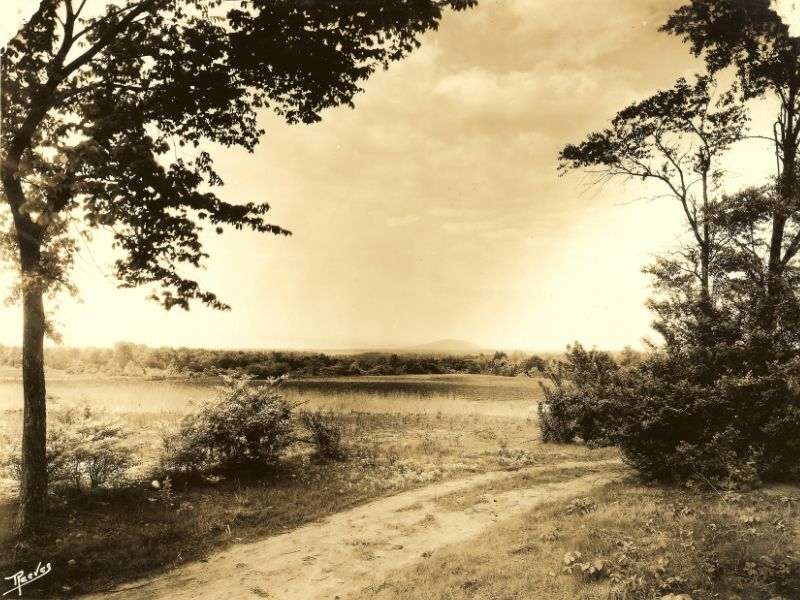
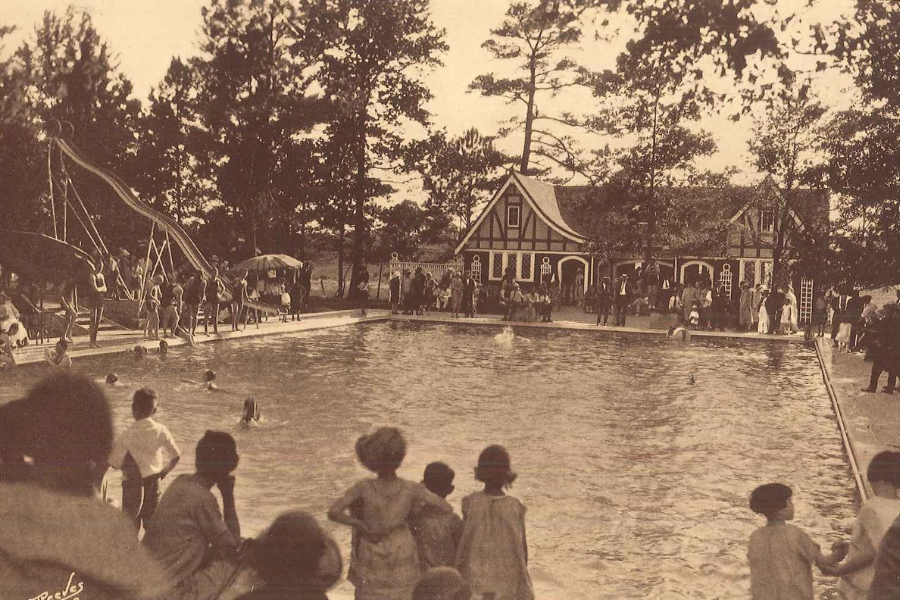
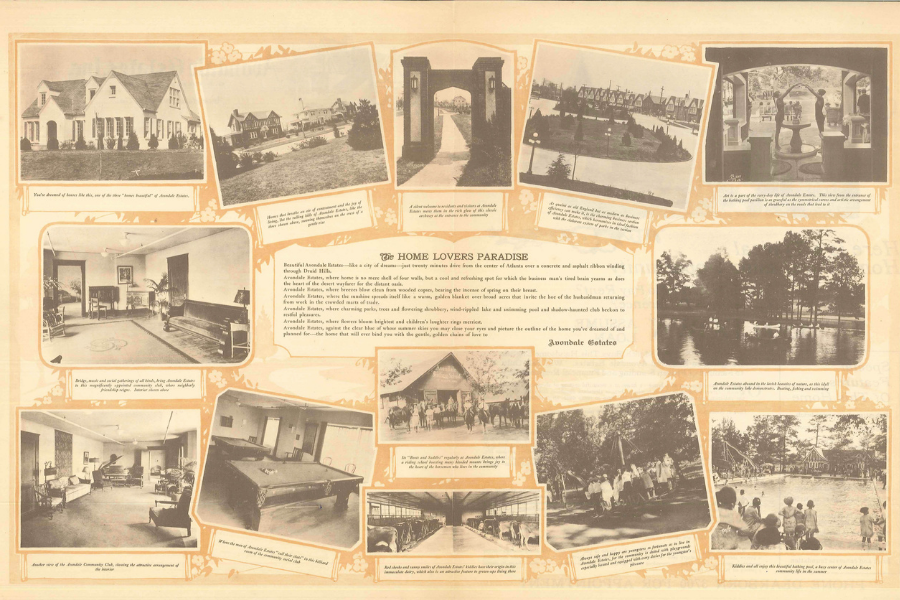
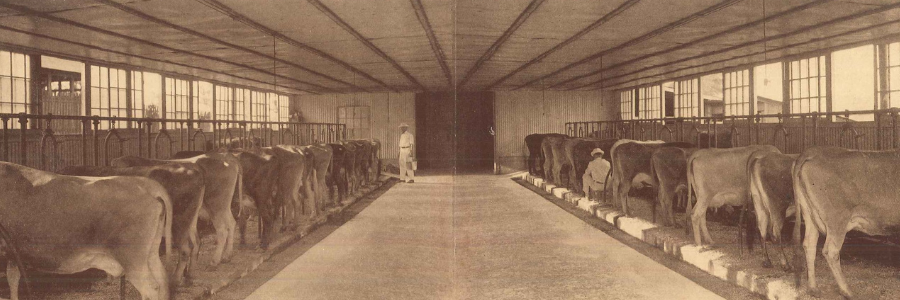
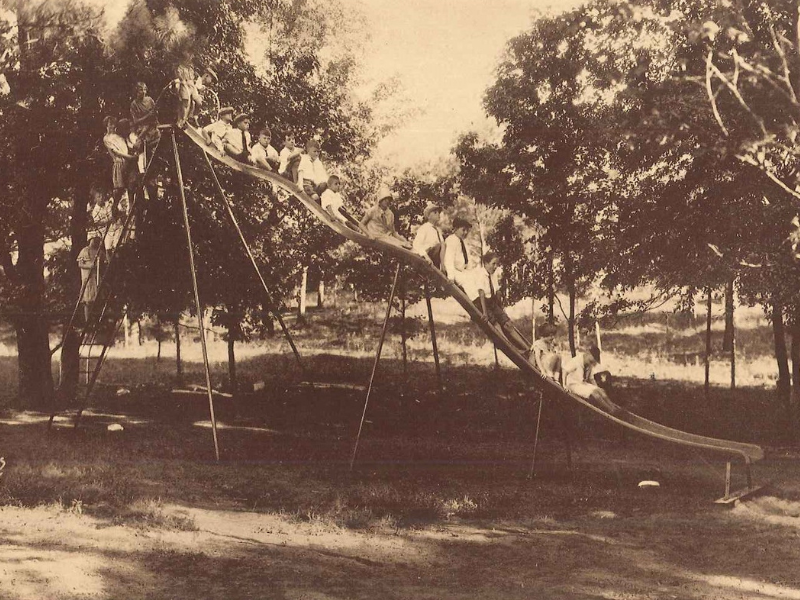
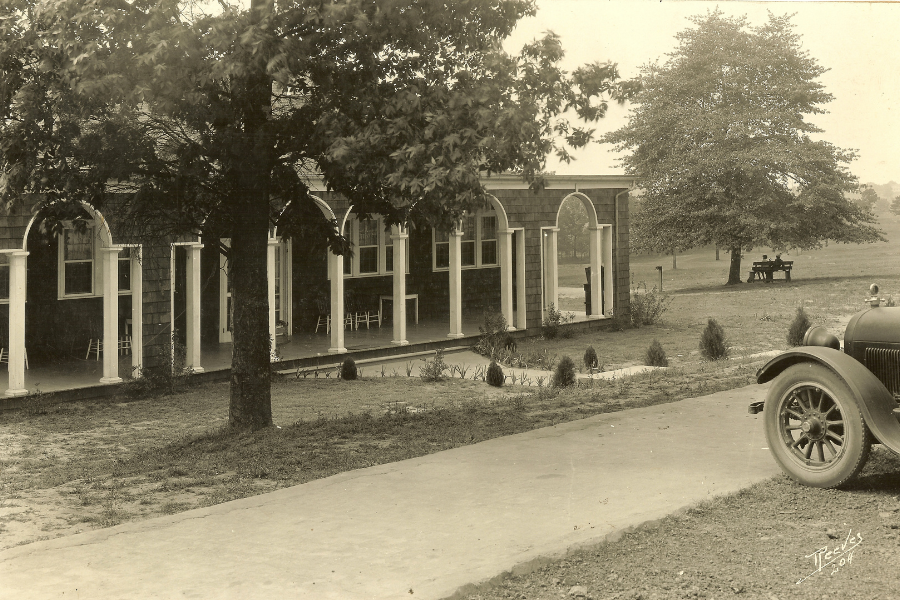
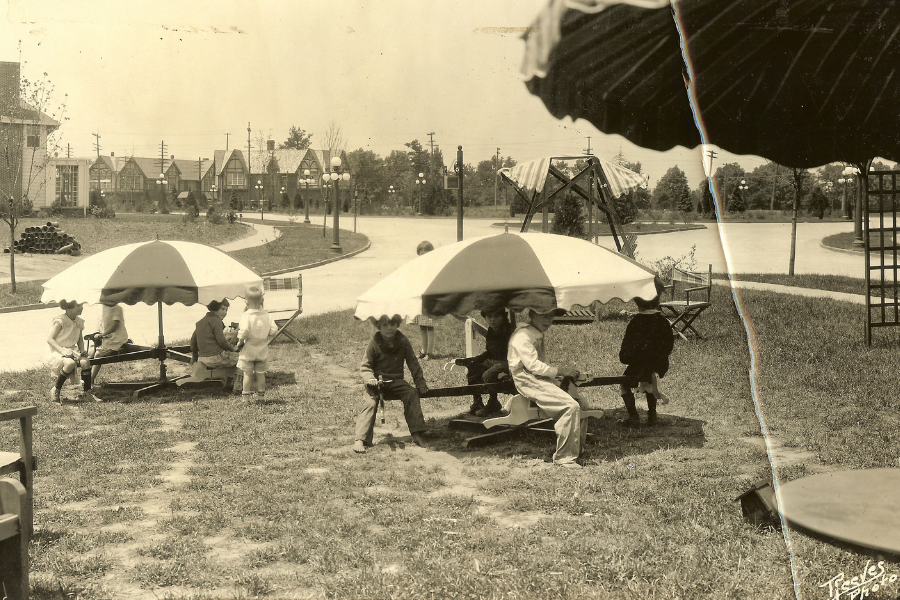
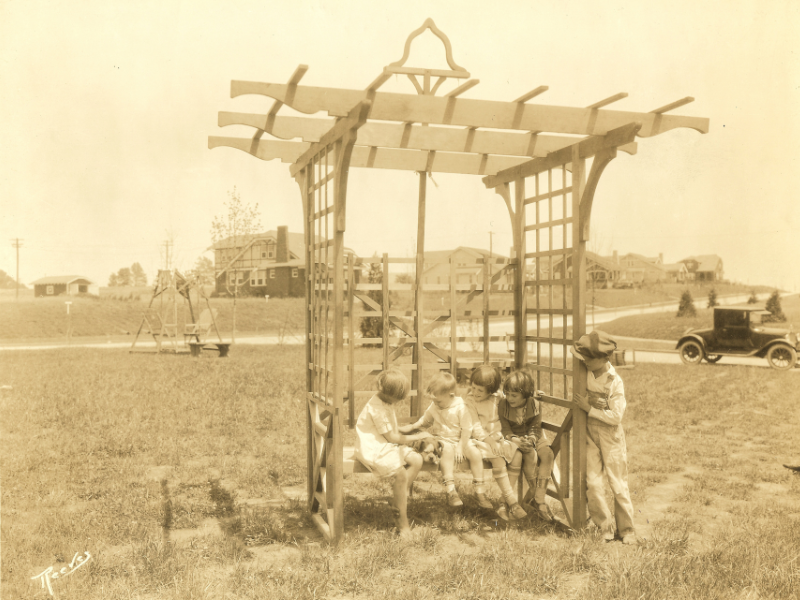
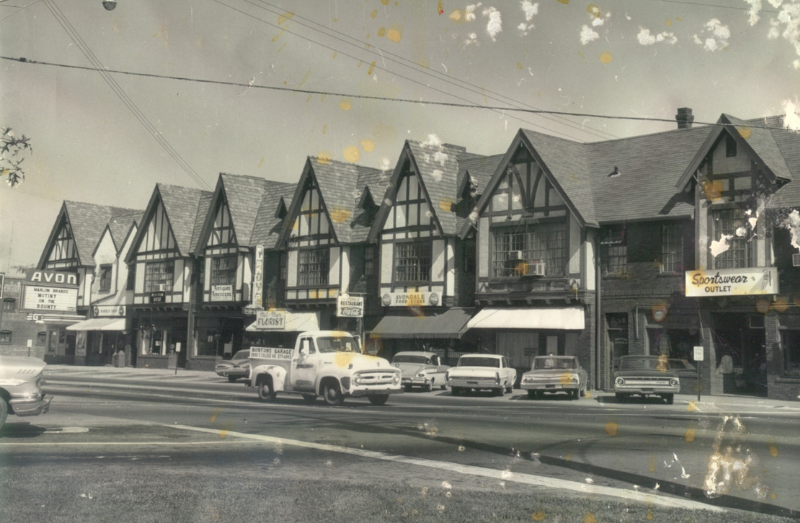
Avondale Estates was nicknamed “Home Lovers Paradise” for a reason. The idyllic setting was perfect for its residents. Everything they needed was located within a few miles in this perfectly planned community. Venturing out of the city was not necessary. From the city’s beginning, residents enjoyed freshly paved streets, a large lake, a swimming pool, acres of shaded parks, a stable full of horses, and athletic fields. The city also featured a state-of-the-art playground, an up-to-date business district, a large nursery and garden, an icehouse, and a dairy with the finest jersey cows to provide residents with the “purest” milk and cream. The commercial buildings were designed to be just as beautiful as the homes. George Willis wanted people to be able to do business in attractive buildings, so he commissioned Arthur Neil Robinson to design them. The two-story buildings had storefronts at the sidewalks and offices above.
The Tudor Revival style seen throughout Avondale Estates was said to be inspired by Stratford-Upon-Avon, the birthplace of William Shakespeare. However, this style was popular all across America from the 1910s – 1940s with its peak in the 1920s. Frequently called “Old English” architecture in its heyday, historians are beginning to question whether its past popularity reflected the racism of the time period and the national desire to limit immigration to white Anglo-Saxon Protestant populations.
The Residents
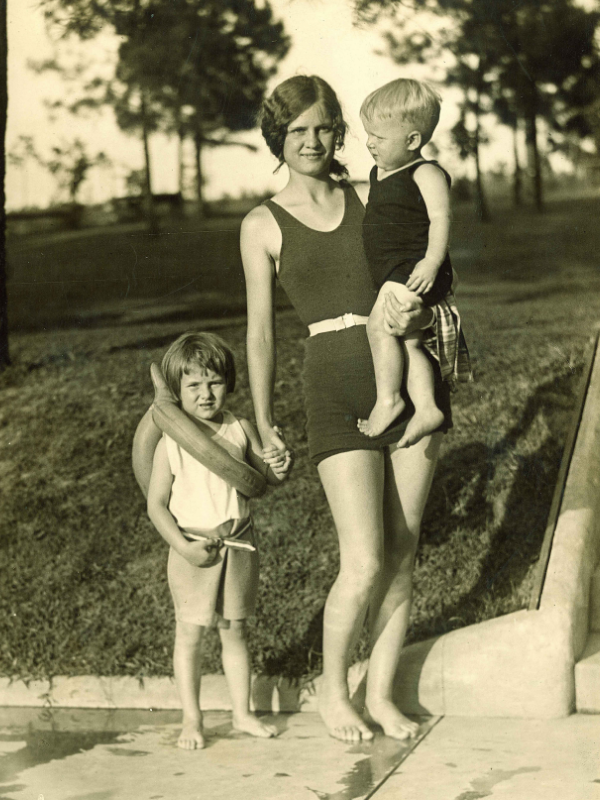
George Willis built his city with the hope that others like him would also value the amenities that he meticulously included and would want to live in Avondale Estates. Willis’ targeted buyers would be middle-class white families looking to escape the city. But it was close enough so that the men could travel to and from Atlanta for work. Like most residential suburbs of the 1920s, Avondale Estates lots and houses could only be purchased by white families. Although Avondale Estates had Black workers within its limits, they were required to live on the outskirts of town in areas like Scottdale and parts of Decatur.
George Willis carefully selected the residents who bought into his community, and he occasionally asked for references. He personally approved each of the shop owners doing business in his town to make sure they could deal with “people of a better class.” New owners began moving into homes in 1925.
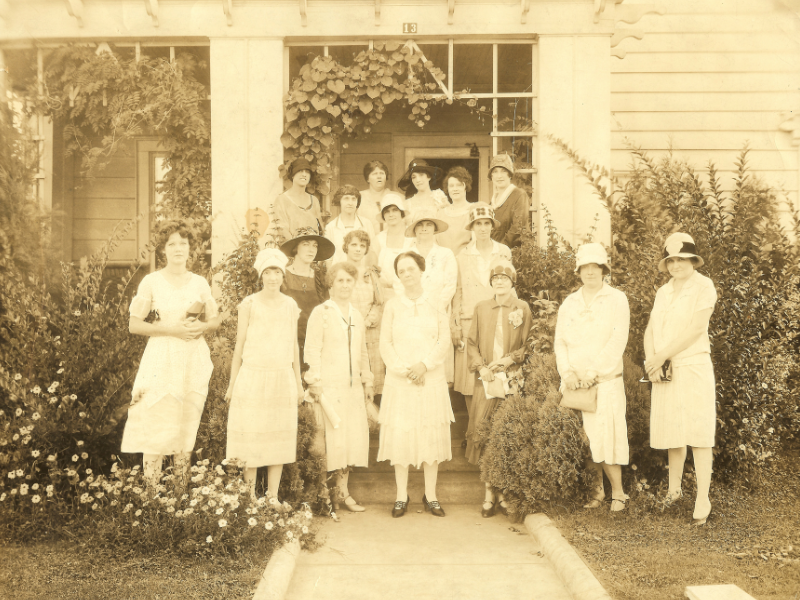
The Avondale Estates Chapter of the Service Star Legion celebrating Forget-Me-Not Day on September 22, 1926.
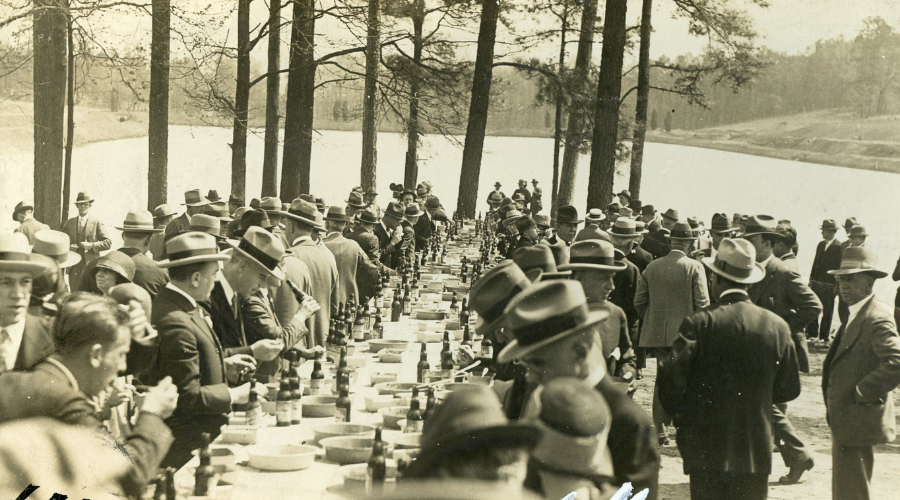
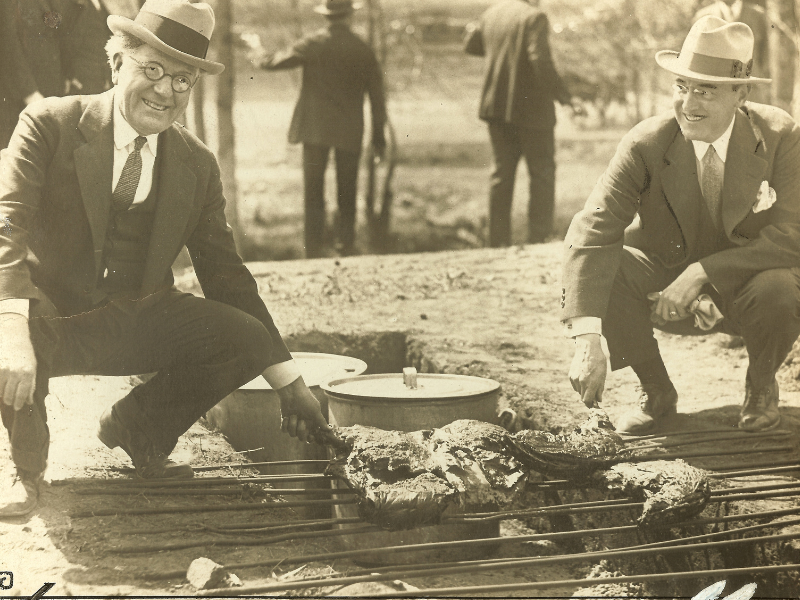
Lakeside barbeque to celebrate Avondale Estates and to acknowledge the Atlanta Board of Realtors, 1926.
The Developer
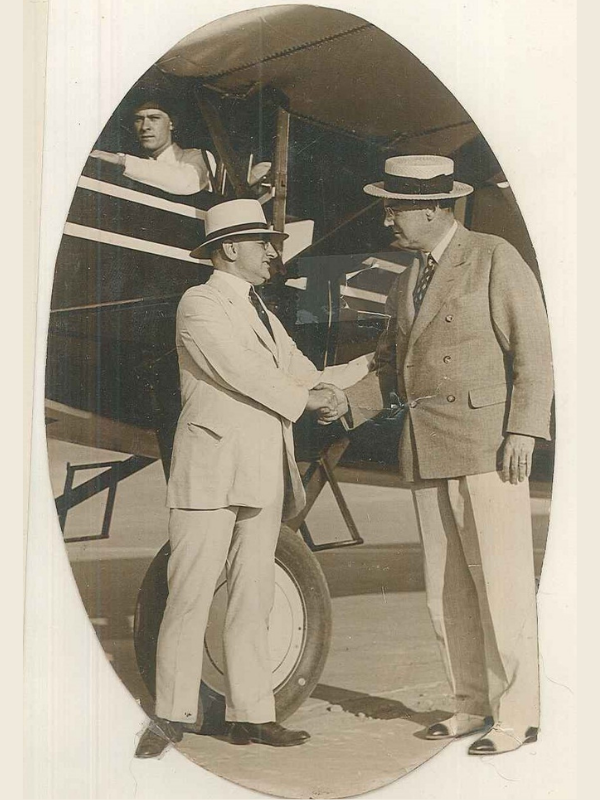
George F. Willis had big dreams and a thick wallet to fulfill those dreams, so where did the money come from? Willis made multiple fortunes by becoming a salesman and later the owner of companies which sold propriety patent medicines which had undisclosed, or secret, formulas. In 1913, he founded International Proprietaries, Inc., which specialized in the production of Tanlac, a bogus product labeled as a “system purifier” made of laxative and about 18% alcohol. The American Medical Association later described Tanlac as a “sky-rocket in the pyrotechnics of fakery.”
Salesmen like Willis specialized in superb marketing tactics and would use techniques such as false testimonials, fabricated product claims, and extensive advertising. In 1922, he sold the company for over a million dollars and later invested in Zonite, an antiseptic preparation made from the well-known Dakin’s solution used in World War I. He also made a fortune from Zonite and eventually sold that company too. By 1924, Willis was living comfortably among the wealthy in Druid Hills with his wife, Charlotte and his three sons.
As with other innovations, mass advertising also took off in the 1920s and became a business strategy. A developer would not only create a product – like Tanlac or Avondale Estates – he would also market his new product directly to consumers.
Charlotte “Lottie” McMichael Bowers, wife to George Willis, was born in Richmond, Virginia, where she came from a prominent family. They had three sons: George Jr., Richard, and John. She was known as a distinguished member of Southern society and was well-known for her philanthropic work. She died in 1934 in Atlanta.
The Hidden Backbone of Avondale Estates
“Avondale Estates was built and flourished off the labor of African Americans.” – Kathryn Wilson
Trash collectors, maids, nannies, gardeners, and construction workers were just a few of the many jobs filled by Black workers. The residents of Avondale Estates lived in luxury because of the hard work put in by these overlooked people. The commercial district was an area open to both races, but with strict segregation rules in place. The Avondale Theatre had a second entrance for non-whites that led to the second story balcony where Black visitors were required to sit after purchasing a ticket. Many of the Black workers and their families lived in the hills of unincorporated Scottdale and endured primitive ways of living; they had no water, sanitation, street lights, or paved roads.
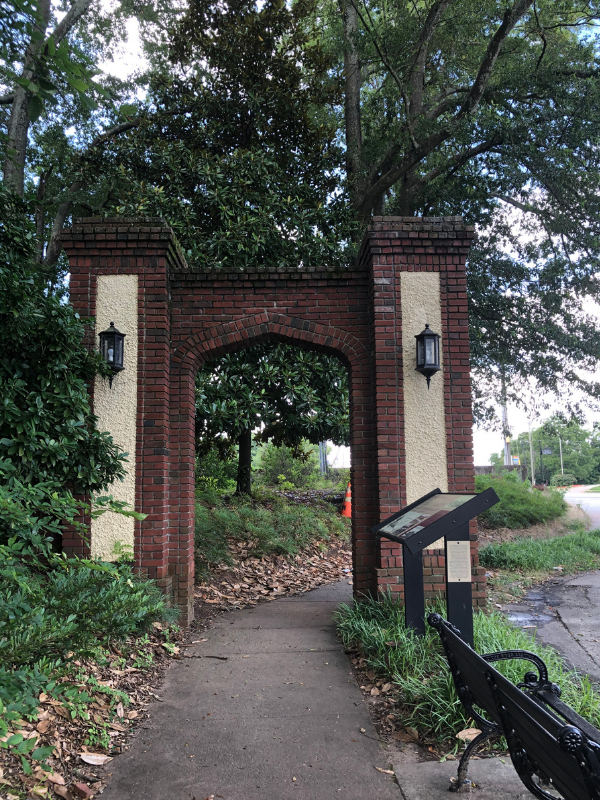
One of the official gateways into Avondale Estates, is now known as Carl’s Corner. Carl Houseworth was a Black laborer who worked in and around the city in the 1930s and 1940s. Houseworth was a common sight around Avondale. He maintained residents’ yards and helped care for their horses. Today only one side of the gateway remains, recently renovated, along with signage explaining the gateway’s origins. However, it fails to mention that Carl was Black or the significance of the Black workers who made Avondale Estates the “Haven of Health and Happiness.”
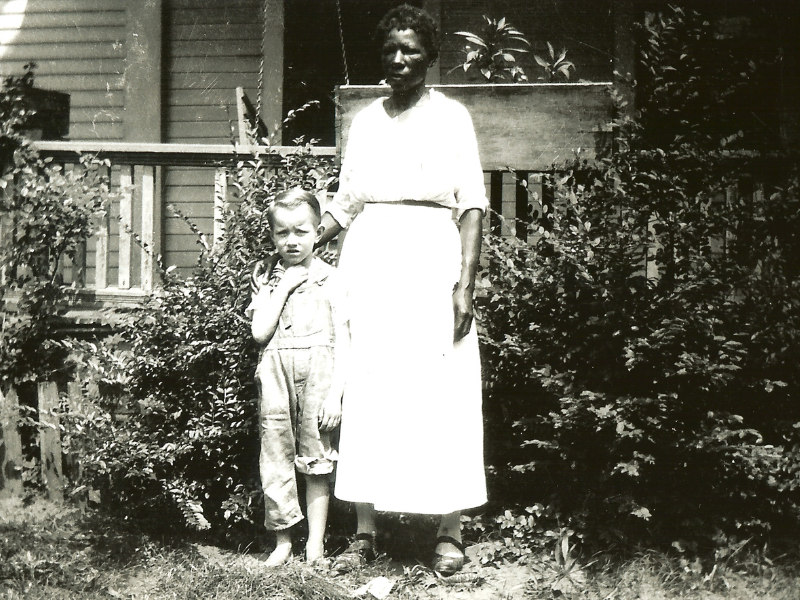
Tom Forkner at age 6 standing alongside Annie Mae who was employed by Ben and Bessie Forkner, circa 1920s.
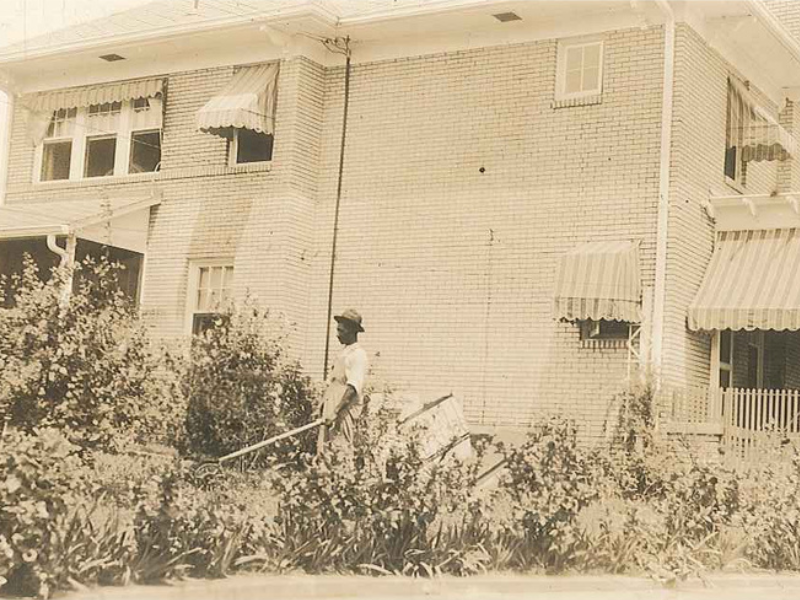
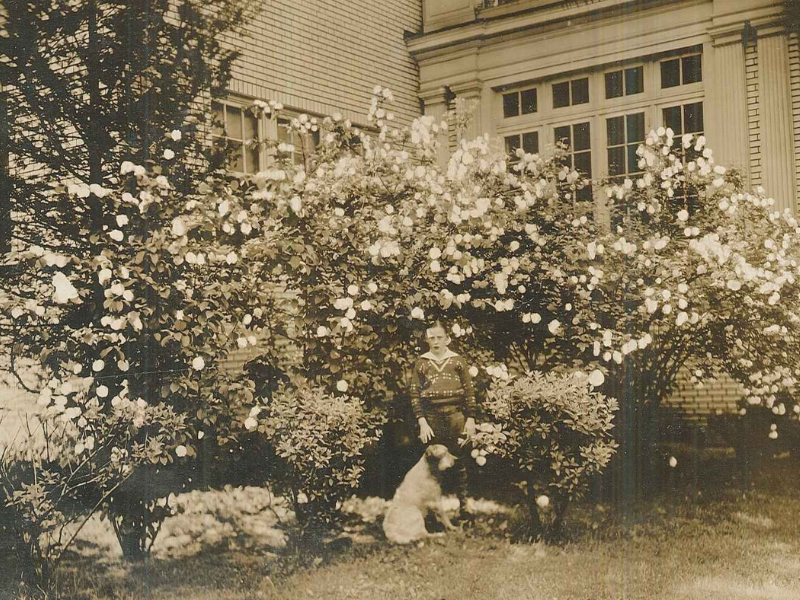
Unidentified worker doing yardwork, circa 1927.
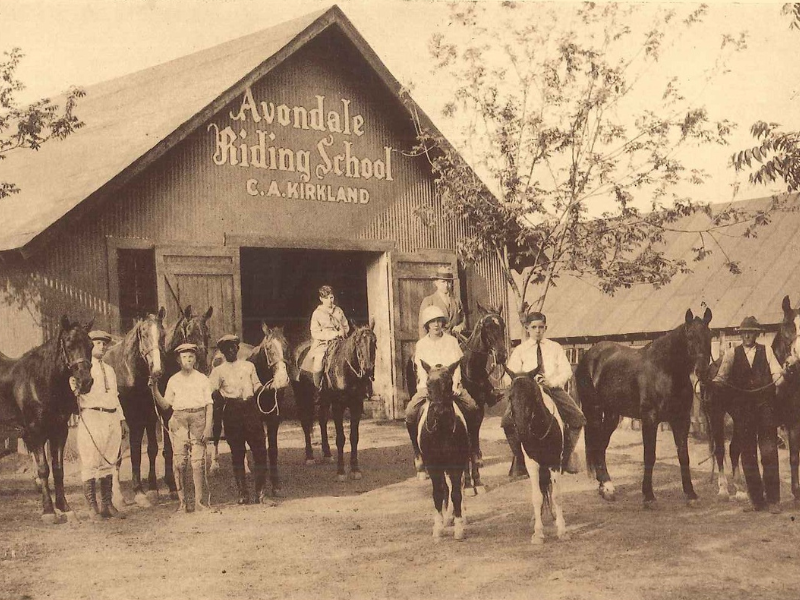
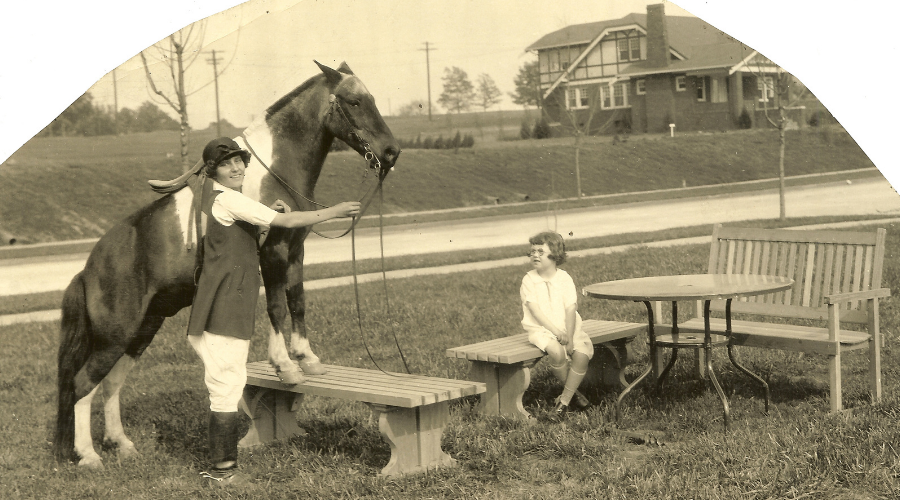
Residents at the Avondale Riding School, circa 1926.
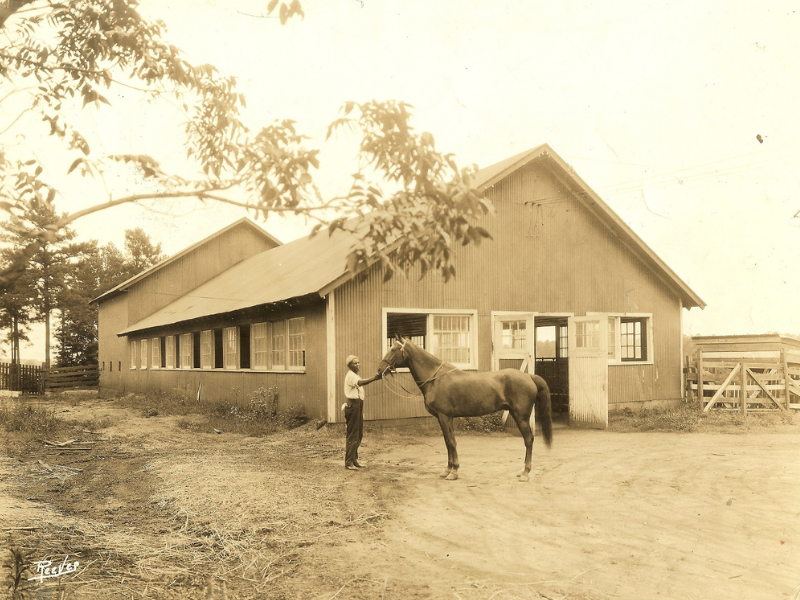
A Gash in the Mountain
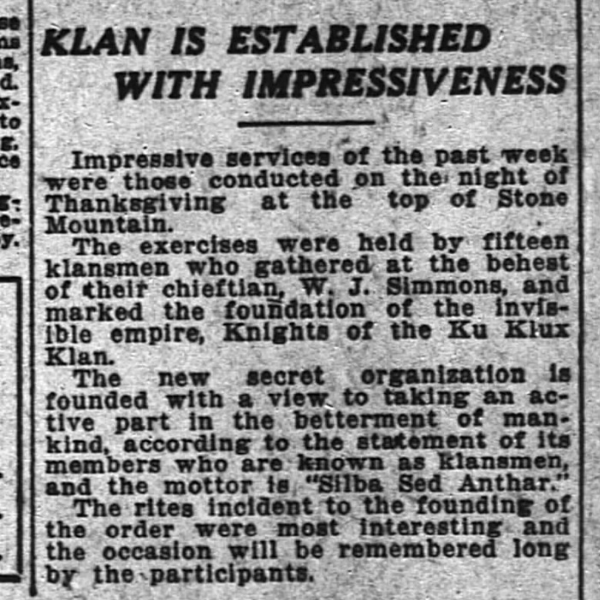
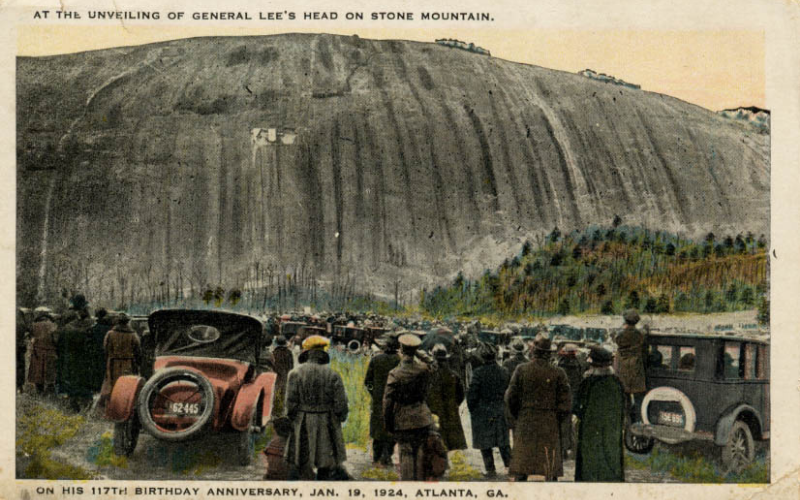
While Willis was busy planning out his dream city, he was also helping to raise money for a soon to be famous project. The Stone Mountain memorial, described as a monument dedicated to the “heroes” of the Confederacy, was also made possible through the contributions of Sam Venable and his family.
George Willis was one of the many prominent people in Georgia working to make a memorial a reality. In 1928, he became president of the Stone Mountain Confederate Memorial Association. He worked side by side with members of the UDC as well as a number of KKK supporters. Gutzon Borglum, the sculptor recruited by the UDC, was a Klansman and outspoken in his beliefs of a “superior race.” In the short time that Borglum worked on the carving (1923 – 1925), Willis extended an invitation to him to stay in Avondale Estates. Borglum had a disagreement with the SMCMA which resulted in the destruction of the models he had created for the monument – valued at $80,000. He was arrested but fled to North Carolina. An oral history with Jimmy Venable credits the power of the Klan for helping Borglum to escape extradition and never stand for trial. There was a historic marker installed in 1983 to commemorate his short stay in the Avondale Estates house. It remains there to this day.
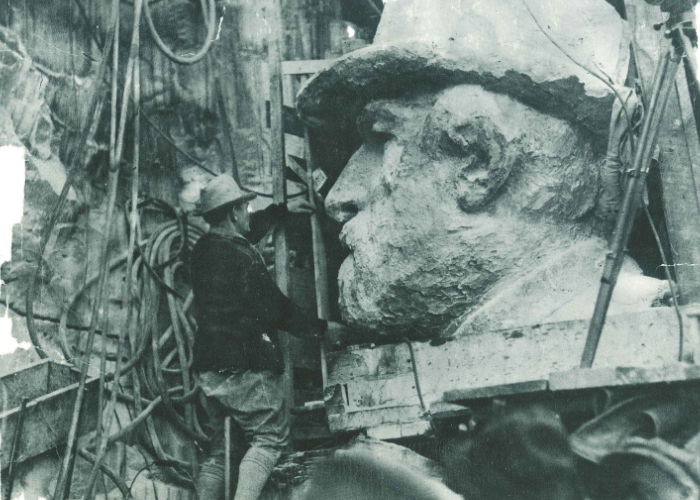
Gutzon Borglum standing next to the carving of Robert E. Lee’s head, circa 1925.
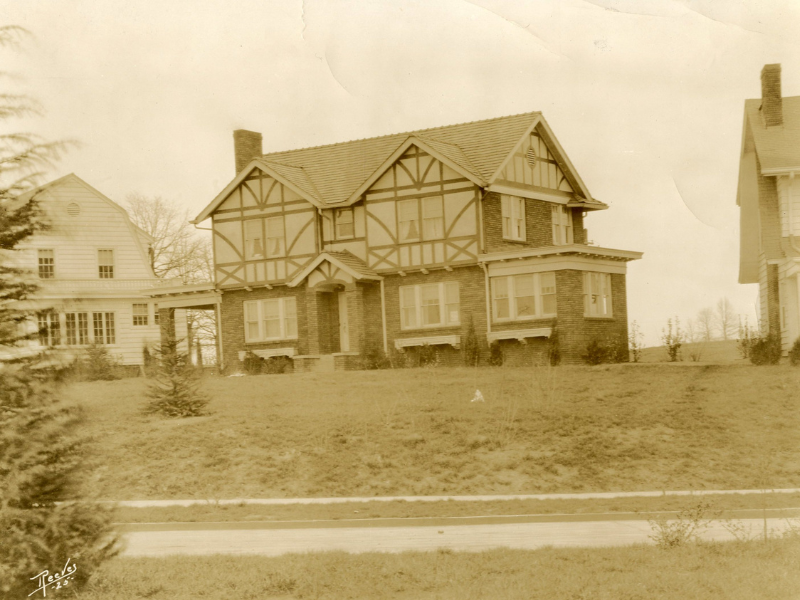
10 S. Avondale Plaza, circa 1925. This was Gutzon Borglum’s home while he was working on the Stone Mountain carving.
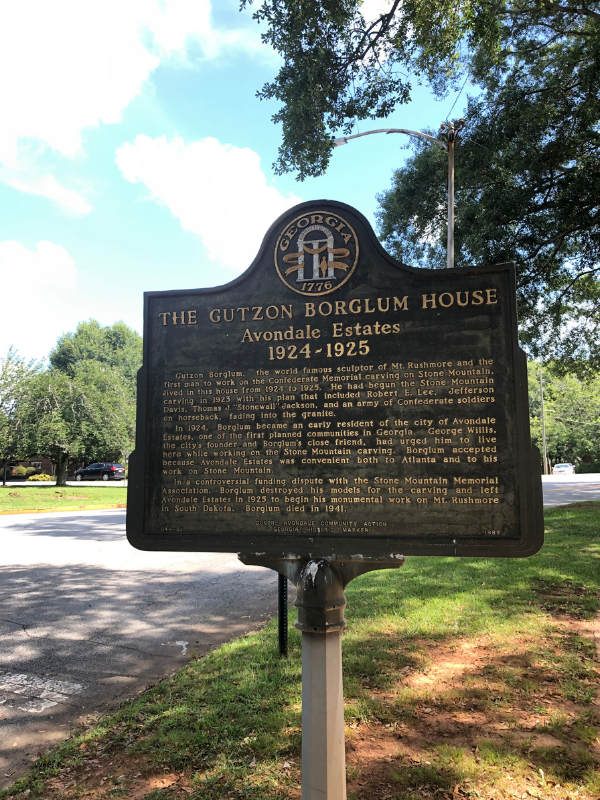
The historic marker honoring Gutzon Borglum’s brief time in Avondale. It was erected in 1903.
The Homes
Nearly all of the early houses included on the original National Register nomination (1986) remain today. Willis oversaw the construction of the first 50 homes in Avondale Estates, which included a sprinkling of high style two-story homes while the rest were more modest one-to-one-and-a-half story homes. The National Register nomination gave the period of significance as 1924 to 1941 and that included about 75 houses that Willis did not develop. Many more houses were built after 1941 and are now also eligible for the National Register of Historic Places. These are interspersed throughout Willis’ city limits on lots that never contained a house until after World War II. Development in Avondale Estates continued around this historic core as the population doubled from 1940 to 1950 and then jumped by half again by 1960.
The high style two-story houses were built in some of the most prominent places near the northern section of the development, particularly around Avondale Plaza. This was a common sales practice at the time which would convey an air of style and wealth to the smaller houses built down the street.
Many of the homes were built using brick veneer; a technique which was favored by developers because a less expensive wood frame house could be quickly built and covered with high quality brick to appear more luxurious. Brick exteriors were used in combination with granite, stucco, clapboard, and shingles. Foundations were brick and concrete. Other optional or standard features touted in advertising from the time period included: hardwood floors, built-in bookcases and china cabinets, brass pipes, Celotex wall insulation, and General Electric wiring. Some homes had steel casement windows. Most of the houses had composite asphalt shingles on the roofs, but a few were built with clay Ludowici tiles. Many of the houses were built with small garages in the back and all had paved driveways and sidewalks. Uniform setbacks for the houses were also dictated in the planning phase.
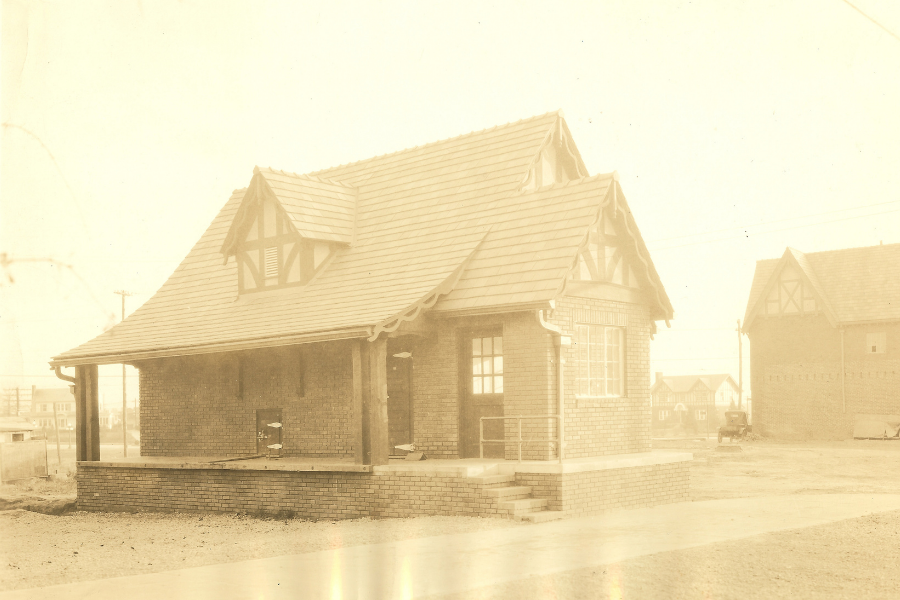
The most popular architectural styles in Avondale Estates were Tudor Revival (English Vernacular Revival), English Cottage, Craftsman, and variations on Colonial Revival. These styles are well represented in historic towns around Georgia, but Avondale truly highlighted the Tudor Revival style by using it for the public buildings like businesses, the pool house, and the clubhouse.
Tudor Revival – English Cottage
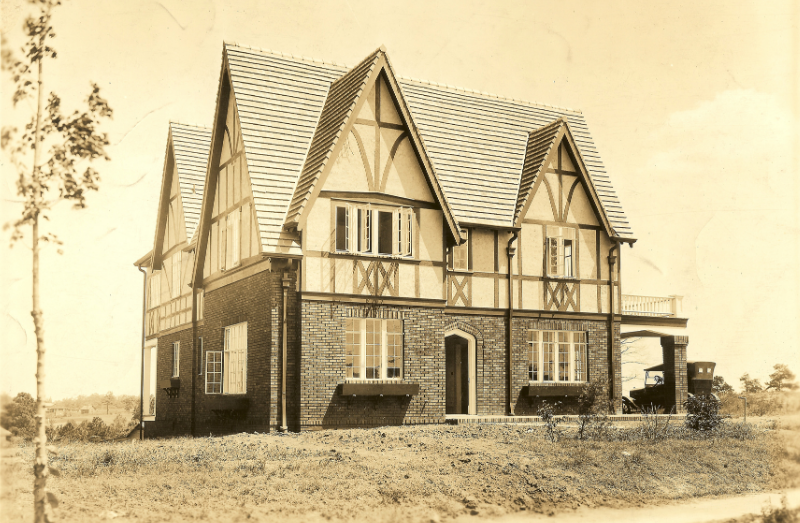
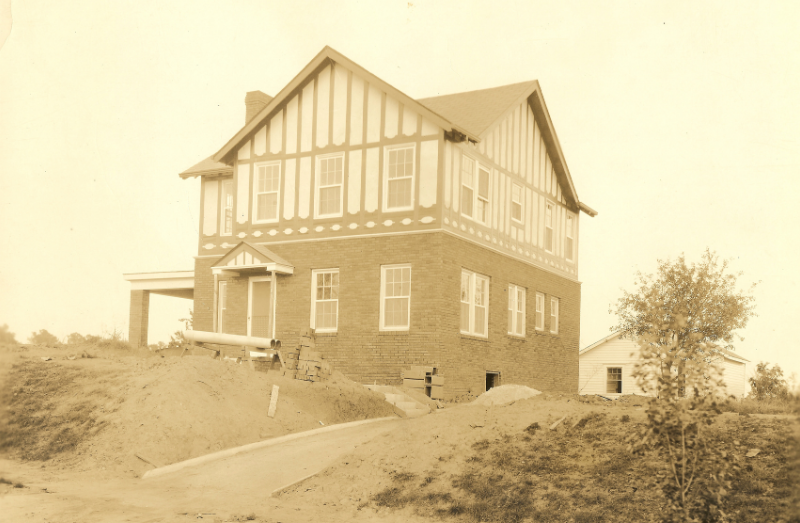
Tudor Revival (English Vernacular Revival) is an architectural style which almost always includes brick on the first story and decorative half-timbered wall surfaces on the second story. In the oldest European versions, half-timbering was made of structurally supportive beams and the voids were filled with a variety of materials. The twentieth-century American versions are wood-framed and both the brick and half-timbering with stucco were added as decorative veneers. The houses have steeply pitched roofs, front facing or multiple gables, casement windows, arched doorways and porches, decorative stonework, and elaborate chimneys.
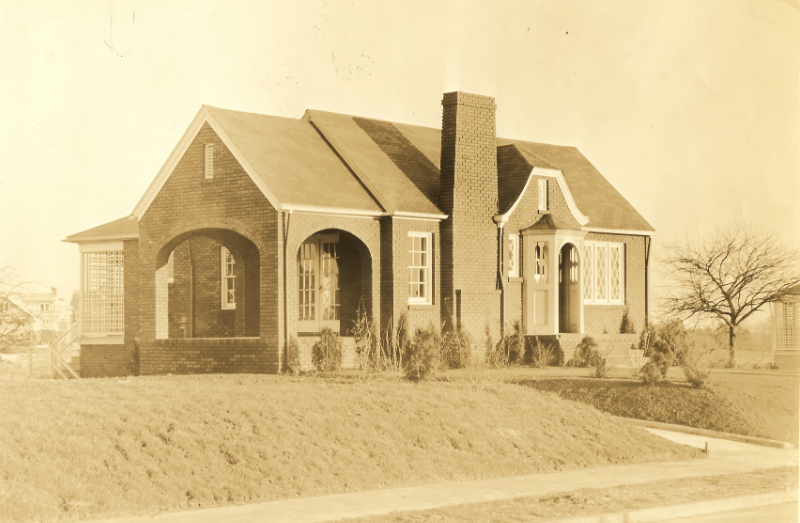
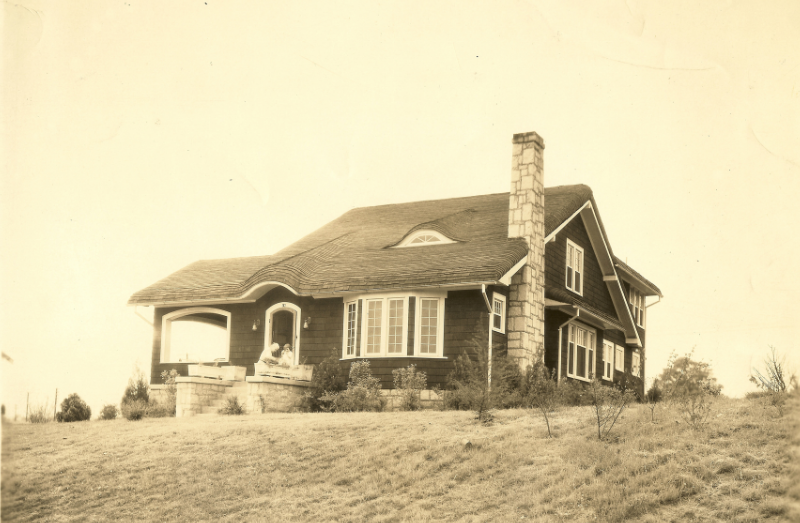
The English Cottage houses are one to one-and-a half-stories and have fewer decorative elements than the Tudor Revival. The modest versions shown here feature narrow multi-paned windows (diamond shaped panes were a popular style choice), covered stoops, and decorative stonework. The chimneys are prominent and one cottage has a very picturesque jerkinhead gabled entry with a gingerbread porch enclosure. The cottage with the bay window has an eyebrow dormer and a “thatched” roof. The eaves were shaped as if they would be covered with thatch, even though it was actually covered with asphalt shingles.
Craftsman
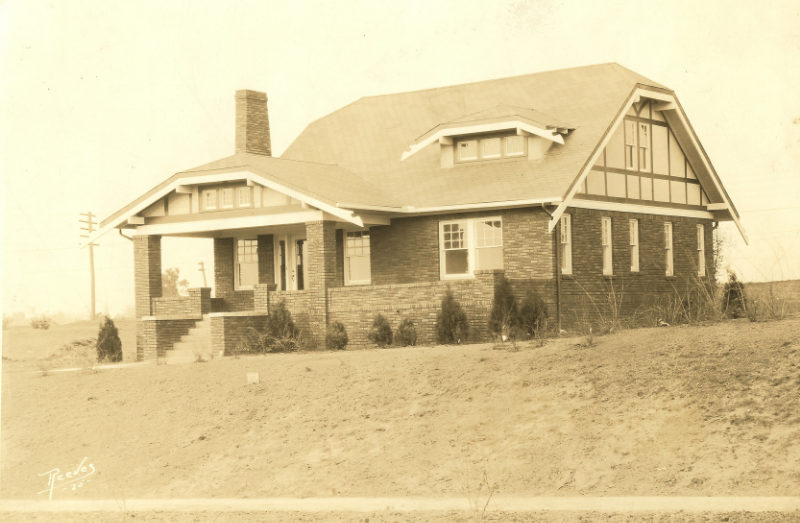
Craftsman style cottages, also called Bungalows, are one-to-one-and-a half-storied houses. They have low-pitched gabled roofs with wide overhanging eaves, which may be decorated with exposed rafter tails and roof brackets. Many of the homes here include decorative fascia boards and a few even have half-timbering on the half story. Another theme repeated from Avondale Estates English Cottages is the occasional use of the jerkinhead gable. Open front porches are an important hallmark of this style and often include heavy square porch columns set atop bases – although one example here has fluted columns of varying heights. Craftsman windows are often grouped in twos or more, and are double-hung, with multiple panes in the top sash but a single pane in the bottom sash. Dormers may be used to add light in the half story and creative visual interest on the exterior. A variety of materials are used in this style including clapboard, brick, stone, and stucco.
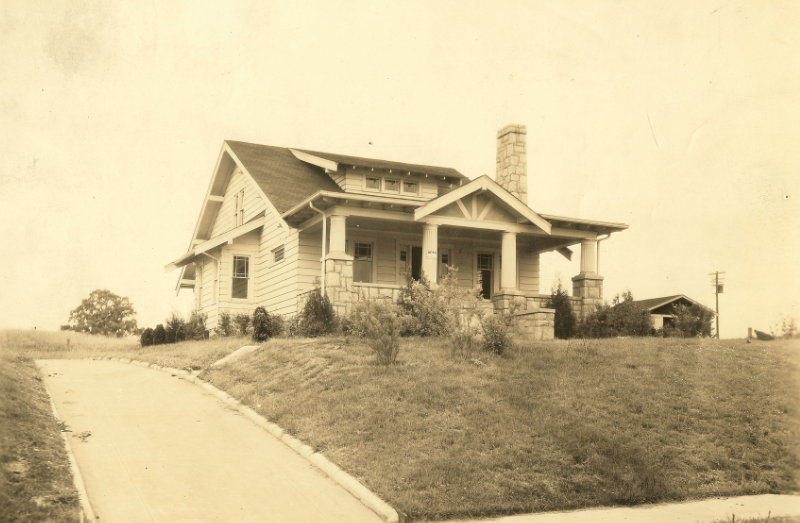
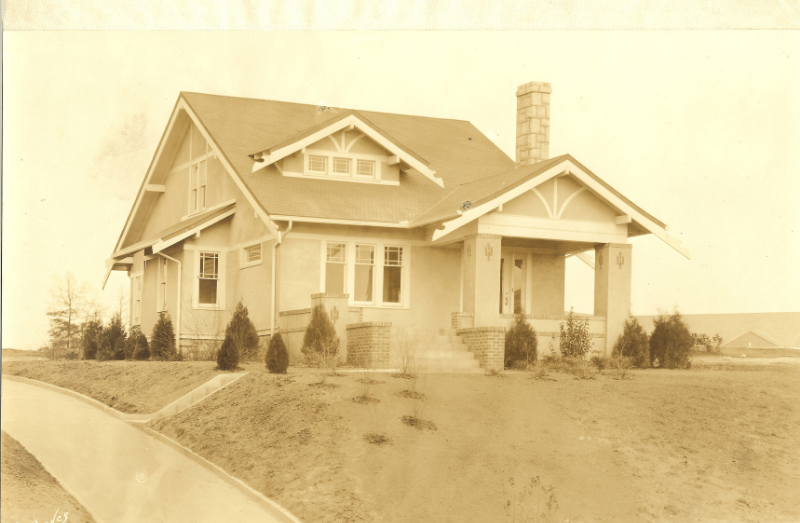
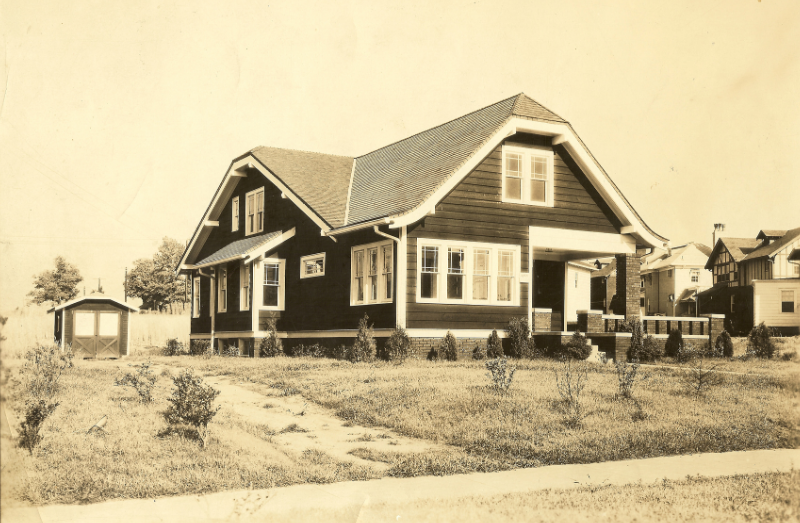
Revival Styles
Many of the Avondale Estates homes have elements from various architectural styles, making them difficult to categorize. And some are practically devoid of ornamentation, owing their style category to perhaps just the roofline.
The Italian Renaissance Revival style is more common in Druid Hills then Avondale Estates. It usually has a steeply pitched hipped roof with wide eaves supported by elaborate brackets. Clay tile roofs were more common for this style, but 15 S. Avondale Plaza was built with asphalt shingles. Other textbook features of this style are shown here: a symmetrical masonry house with one-story side porches, and grouped windows, here with arches.
There are two homes in Avondale that are modest examples of Spanish Colonial Revival, which is not common in Georgia. This style generally has a clay tile roof with a very small eave, and like 32 Dartmouth, the exterior was usually a smooth stucco finish. It has a front-gabled asymmetrical façade with a large arched window. There is a small opening, roofed with tile, for the car to drive through to reach the matching garage in the rear.
The Dutch Colonial Revival style has a distinctive gambrel roof and a shed dormer creating the second floor. 9 S. Avondale Plaza has a rare (for Avondale Estates) enclosed side porch and the front entryway has sidelights topped by a small curved stoop.
11 S. Avondale Road could best be considered Colonial Revival, although it has just a few of the hallmarks: a symmetrical façade, dormer windows, an entry portico with entablature supported by Doric columns, and sidelights around the door. However, most examples would not have eyebrow dormers or a “thatched” roof, which give this home a special Avondale charm.
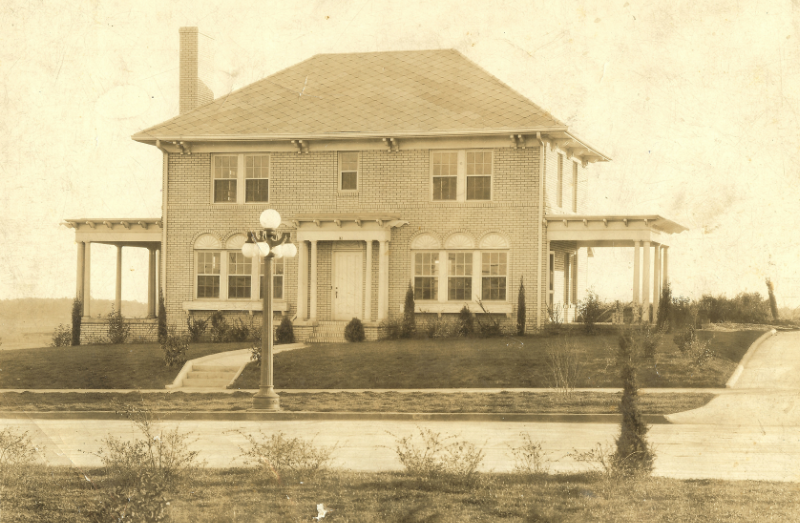
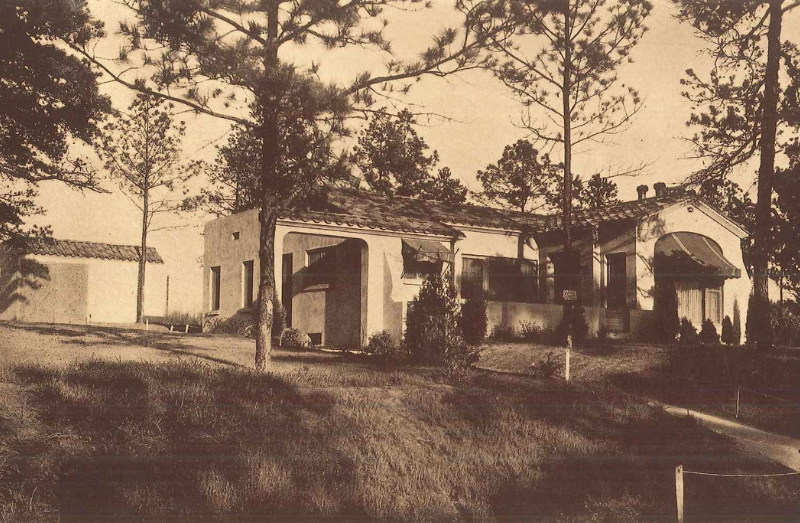
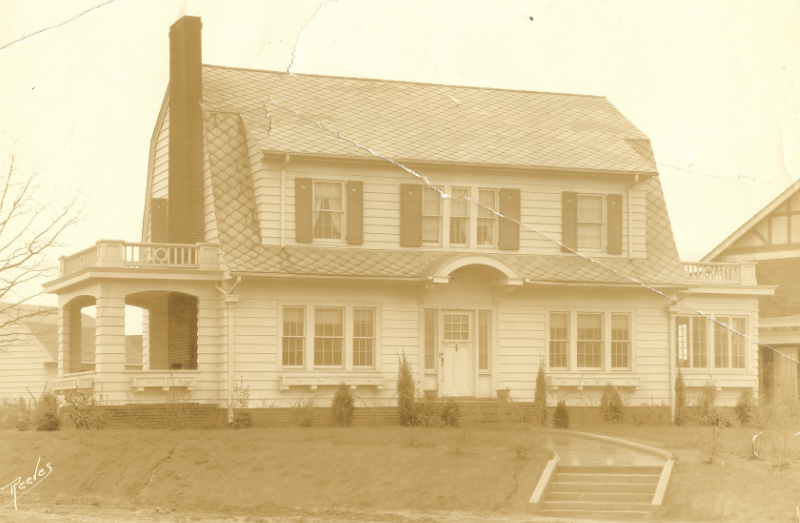
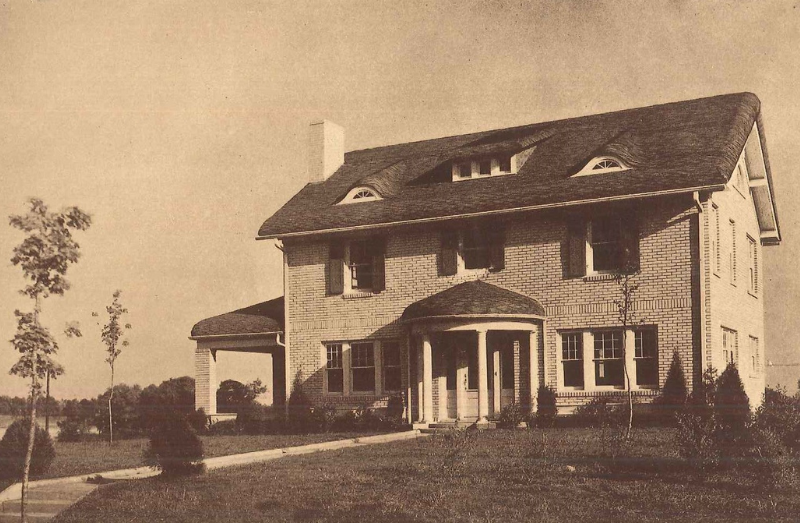
Avondale Estates Through the Years
The city has been preserved – almost in amber – for decades; and in the recent past, it has been revered for its ability to remain unchanged. This lack of change may refer to a way of life, but also certainly alludes to the historic racial demographics. While many urban centers throughout the South experienced “white flight” in the 1960s, Avondale residents were deemed “too stubborn” to move away. And some systems of governance kept Avondale Estates’ Black population suspiciously low, especially in comparison to the areas around Atlanta. Tactics such as anti-yard sign legislation, passed by the city in 1967, and intense policing were used to enforce segregation and create a hostile environment for Black people. The sign legislation prevented realtors from using “For Sale” signs, so houses sold only through word of mouth. This ensured that outsiders – and Black home buyers – had no chance of living in Avondale Estates. The ordinance prohibited all signage, which city officials pointed out as a defense when citizens questioned its actual effect of excluding prospective Black home buyers. It was not the only small southern city to keep an ordinance like this on the books for decades.
In 1980, fewer than 2% of the city’s residents were Black – this same percentage held steady from 1940 and was in great contrast to surrounding communities. It rose to just 3.3% in 1990. African Americans comprised about 8.5% of the city’s population by 2000. Avondale Estates’ population continues to diversify, however, in part through annexation. Black residents now make up about 14% of the population and the growing city had added Latino and Asian residents. There is a notable demographic shift in same-sex couples who in 2010 made up more than 4% of the population, making the city very welcoming to the LGBTQ+ community.
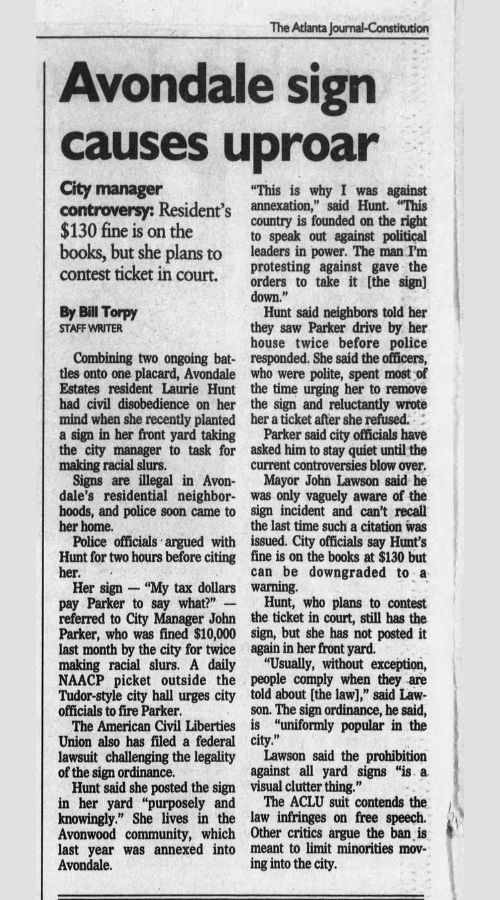
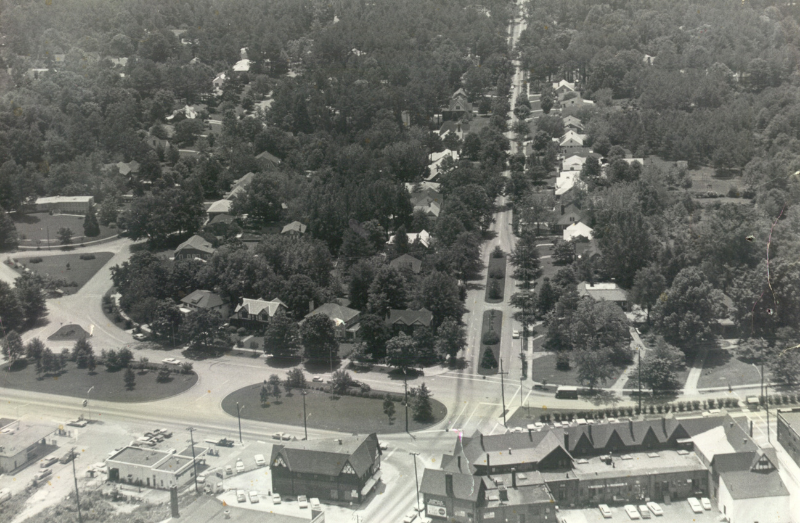
Avondale turned a blind-eye to its past until an episode with a city official in 1998 caused people to take a closer look at its history with race. Detailed in just one article here, the racial slurs coupled with the sign ordinance sparked a turning point in the city’s history. Some residents and business owners were disturbed enough to join the fight to bring positive change to their community; these efforts continue into the present.
Today’s Avondale Estates remains a charming and desirable community with fantastic amenities and great walkability. Part of its beauty is retained through an ordinance that created a Local Historic Preservation District. Some developers and homebuyers now chafe at property restrictions in the Atlanta area, yet Avondale Estates proves the success of these protective measures.
In 1990, concerned city residents created a local historic district and protected it with a preservation ordinance. This local regulation helps the city to ensure that this district remains cohesive and to consider important elements beyond the houses and their materials.
For Avondale Estates, the mature historic landscaping in very important and can be best enjoyed by walking around the city. It is from the street level that one can appreciate the tree canopy, sidewalks, stone walls, the spacious and often sculpted front yards, and the undeveloped communal lands.
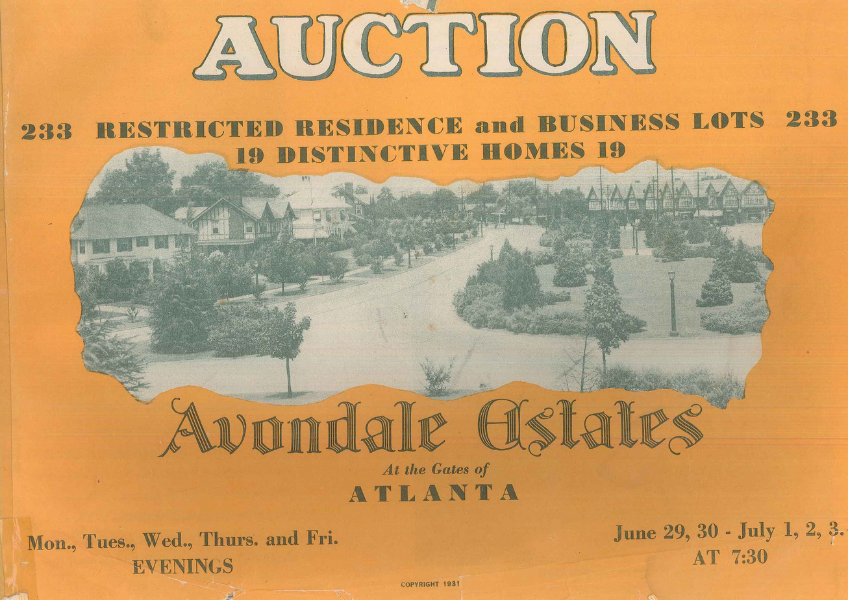
Announcement for auction of lots, 1931-1932. The Great Depression hit and George Willis was forced to sell off lots at extremely low prices.
The ‘After’ Picture
It is safe to say that Avondale Estates has been a thriving community since its creation in 1924. George Willis spent his fortune on his beloved city but could not keep the momentum going once the Great Depression hit. This did not deter the community from keeping their devotion to Willis and the city they loved for nearly a century.
Reading about the history of Avondale Estates is reminiscent of a fairytale. A taste of paradise with endless amenities, beautiful homes, and a static, but peaceful atmosphere. However, this fairytale is only half of the story.
Avondale Estates is not unique in the way that it has omitted part of its past for so long. Many towns and cities across the country have done the same thing. The whitewashing of history has occurred for centuries in the United States and is part of the reason we have very little historical information on people of color. There is still so much we do not know about the Black citizens who lived and worked around Avondale Estates and are therefore part of the city’s history event though they were prevented from living there. The exclusion of people of color, which began in 1924 when Avondale was established, caused a deep wound on the city’s delicate image: a wound that wouldn’t be acknowledged or addressed until very recently. Exclusion and prejudice cause fractures in communities that deepen, not disappear, over time.
It is incredibly important to examine every part of history – even the parts that make us uncomfortable. In doing this, we become better educated and better equipped to avoid the same mistakes and learn fully who we are, as individuals and as a community.


